
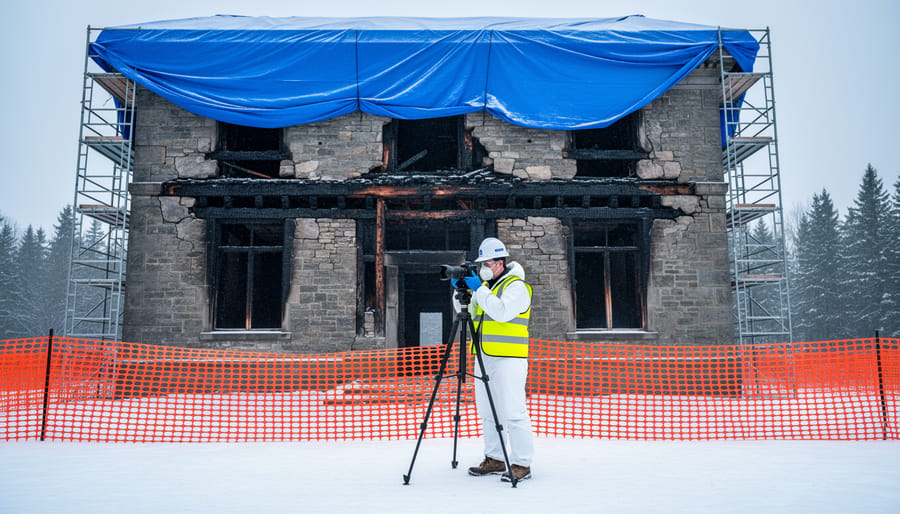
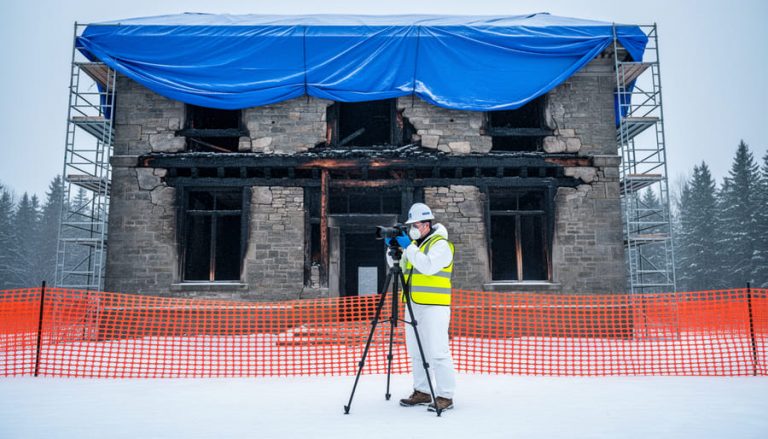
When flames consume a heritage building, the race to preserve Canada’s cultural memory begins within hours. Secure the site perimeter immediately with temporary fencing and weatherproof tarps to prevent further deterioration from rain, snow, and unauthorized access. Document everything through comprehensive photography and video before anyone disturbs the scene—these records become essential references for architects, conservators, and insurance assessors throughout the restoration journey.
Engage a heritage conservation specialist within 48 hours who understands period-specific construction methods, as standard contractors may inadvertently destroy irreplaceable historical evidence or use incompatible modern materials. These experts assess structural stability, identify salvageable artifacts, and create detailed restoration plans that honor original craftsmanship while meeting contemporary building codes. The National Trust for Canada maintains a directory of qualified professionals experienced in post-fire heritage restoration.
Stabilize charred structural elements before attempting removal, using specialized consolidants that prevent historic timber and masonry from crumbling during handling. Water damage from firefighting efforts often causes equal destruction to flames themselves, requiring immediate moisture extraction and controlled drying to prevent mold colonization in heritage materials. Document material samples for laboratory analysis—knowing the exact composition of original mortars, paints, and finishes proves invaluable for authentic reconstruction.
Canadian heritage sites face unique restoration challenges given our diverse architectural legacy, from Québécois stone buildings to West Coast First Nations structures and Maritime wooden churches. Each fire-damaged property tells a story worth preserving, requiring compassionate decision-making about whether restoration remains feasible or if property owners must explore alternatives like how to sell a fire damaged house when rebuilding becomes impossible. Understanding the restoration process empowers communities to advocate effectively for their irreplaceable cultural landmarks.
The First 72 Hours: Immediate Actions After Heritage Site Fire Damage
Emergency Stabilization and Safety Protocols
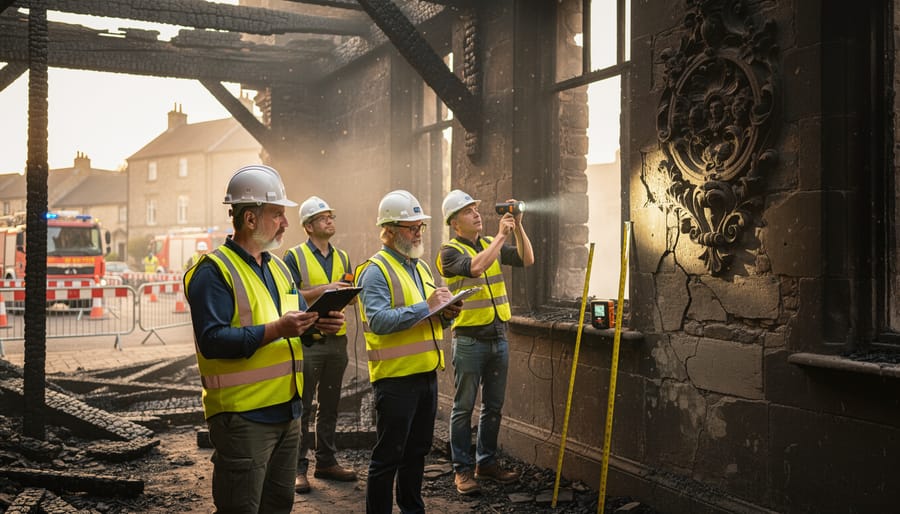
When flames die down at a heritage site, the race against time begins. Within hours of a fire being extinguished, specialized teams mobilize to prevent further loss. Structural engineers arrive first, their task both urgent and delicate: they must assess whether weakened walls, charred beams, and heat-damaged masonry can withstand their own weight, all while recognizing that every timber and stone tells a story worth preserving.
Fire marshals work alongside conservators to establish safety perimeters that balance public protection with archaeological integrity. Rather than bulldozers clearing debris, trained specialists carefully document and remove materials layer by layer, treating fire-damaged remains as an active excavation site. Dr. Helena Marchant, a heritage conservation engineer who responded to several Canadian site emergencies, explains that “temporary structural supports often become collaborative works of art themselves, designed to stabilize without penetrating historic fabric.”
Emergency protocols include rapid deployment of weatherproofing systems—temporary roofing that shields exposed interiors from rain and snow while allowing moisture from firefighting efforts to escape. Teams catalog artifacts in situ before moving them, photographing exact positions to maintain contextual relationships. Climate-controlled storage facilities stand ready to receive smoke-damaged textiles, documents, and artifacts requiring immediate stabilization. This careful choreography transforms potential catastrophe into controlled recovery, preserving not just buildings but the irreplaceable stories embedded within their walls.
Documentation: Capturing What Remains
Before a single charred timber is moved or a piece of melted glass touched, documentation teams arrive with cameras, measuring tools, and meticulous determination. This initial recording phase represents one of the most critical stages in heritage restoration—a moment when evidence that could vanish forever is systematically preserved.
Dr. Sarah Chen, a conservation archaeologist with Parks Canada, explains the urgency: “Fire scenes are dynamic environments. Rain, wind, and even well-meaning volunteers can alter or destroy crucial evidence within hours. We photograph everything from multiple angles, create detailed floor plans showing debris patterns, and record the precise location of every artifact.”
The documentation process follows strict archaeological preservation protocols. Teams use photogrammetry—capturing hundreds of overlapping images to create precise 3D models—alongside traditional sketches and written observations. Each photograph includes a scale reference and directional marker. Conservators note material conditions: which timbers retain structural integrity, where plaster has spalled away, how smoke damage has penetrated different surfaces.
This painstaking record-keeping serves multiple purposes. It guides restoration decisions, provides legal documentation for insurance claims, and creates an invaluable research archive. At Notre-Dame Basilica in Montreal following a 2019 fire, digital documentation captured details invisible to the naked eye, later revealing the original paint schemes hidden beneath centuries of soot and varnish.
Assessment and Salvage: What Can Be Saved?
Archaeological Artifacts in the Aftermath
When flames finally subside at a heritage site, the race to preserve irreplaceable artifacts begins immediately. Unlike modern buildings where contents might be replaced, heritage sites often house items of profound historical significance—documents penned by founding figures, Indigenous artifacts spanning millennia, or archaeological specimens that represent the only physical evidence of past communities.
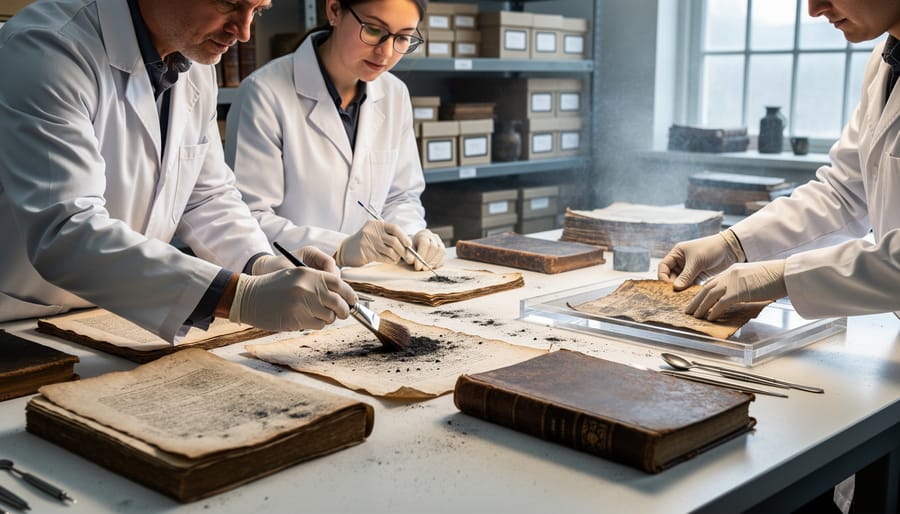
Dr. Margaret Chen, Senior Conservator at Library and Archives Canada, emphasizes the critical first 48 hours: “Smoke damage continues deteriorating organic materials long after the fire is extinguished. We’ve seen eighteenth-century manuscripts become unreadable within days if not properly stabilized.” Her team responds to heritage fires across the country, armed with specialized equipment to assess and triage collections.
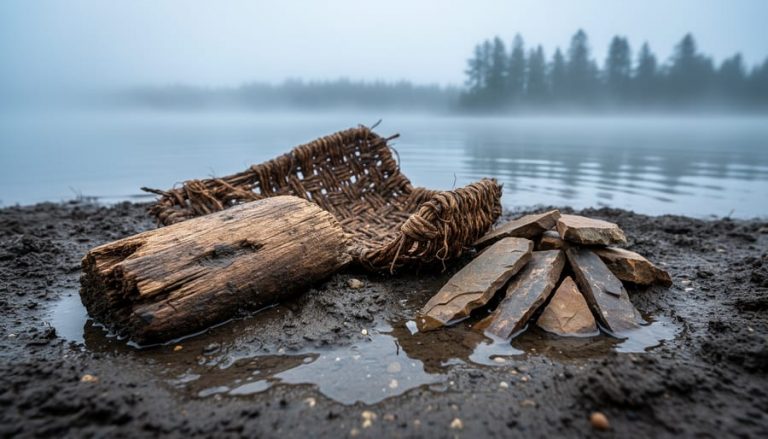
Water damage, ironically from firefighting efforts, often proves more destructive than flames themselves. Canadian museum artifacts require immediate freeze-drying or controlled drying to prevent mold growth and material warping. Archaeological ceramics can disintegrate if dried too quickly, while waterlogged wooden artifacts must remain wet until proper conservation begins.
The approach to protecting museum collections extends beyond physical preservation. Digital documentation becomes crucial—photographing items in situ before removal, cataloging smoke exposure levels, and creating detailed condition reports. Indigenous artifacts receive special protocols, often requiring consultation with community elders before handling or moving items.
Structural instability adds complexity, as conservators must balance artifact preservation against personal safety when entering compromised buildings to retrieve irreplaceable treasures.
Structural Elements Worth Preserving
When fire sweeps through a heritage building, the initial devastation can make salvage seem impossible. Yet beneath charred surfaces and smoke-stained walls, experienced conservators know that remarkably resilient structural elements often survive, waiting to tell their stories once again.
The assessment process begins almost immediately after fire suppression. Heritage engineers and architectural historians carefully document what remains, searching for elements that retain both structural integrity and historical authenticity. Dr. Michelle Cartier, a restoration architect who worked on several Quebec heritage properties, explains that “original timber framing is often stronger than people expect. The outer char layer actually protects the inner wood from further damage, creating a natural barrier.”
Conservators examine heavy timber beams using specialized tools that measure density and moisture content beneath charred surfaces. Hand-hewn beams with visible adze marks, mortise-and-tenon joinery, and wooden pegs become precious artifacts worth preserving. These elements represent not just construction techniques but the craftsmanship of specific historical periods.
Masonry elements frequently survive fires with remarkable integrity. Original brick, stone foundations, and decorative terra cotta often require only careful cleaning and repointing. Experts assess each brick or stone block individually, looking for structural cracks versus superficial soot damage. Heritage lime mortar, distinct from modern cement, provides valuable clues about construction dates and methods.
Architectural features like wrought iron hardware, decorative metalwork, stone lintels, and carved wooden elements receive meticulous evaluation. Even fragments can be catalogued, documented, and potentially restored or replicated using historical techniques. This painstaking inventory becomes the foundation for authentic restoration that honors the building’s original character while ensuring modern safety standards.
Canadian Case Study: The Parliament Centre Block Fire and Restoration Legacy
On a frozen February night in 1916, flames consumed Canada’s Parliament Centre Block, leaving only the Library of Parliament standing amid the ruins. Seven people perished in the blaze, and the nation’s architectural heart lay devastated. What emerged from those ashes, however, would establish principles that continue shaping heritage restoration across Canada more than a century later.
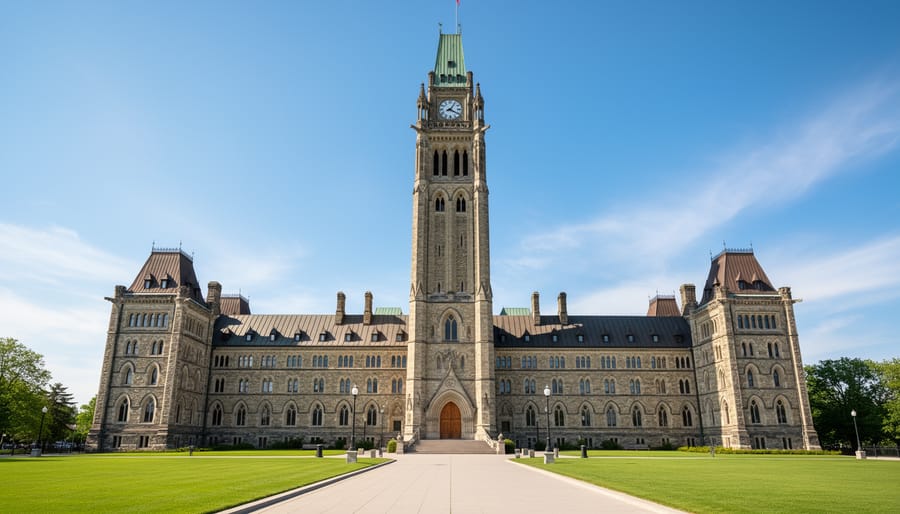
The restoration debate began almost immediately. Some advocated for a completely modern replacement, arguing the disaster offered an opportunity to embrace contemporary design. Others insisted on faithful reconstruction of what was lost. The compromise solution proved visionary: architects John Pearson and Jean-Omer Marchand created a building that honored Gothic Revival traditions while incorporating modern fireproofing technologies and improved safety features. This balanced approach—respecting heritage while learning from tragedy—became a foundational philosophy still referenced in contemporary restoration projects.
Dr. Catherine Armstrong, heritage conservation specialist at Carleton University, explains the lasting impact: “The 1916 restoration taught us that heritage preservation doesn’t mean creating museum pieces frozen in time. The rebuilt Centre Block used modern materials like steel-reinforced concrete behind its limestone facades. It proved you could maintain architectural integrity while embracing innovations that prevent future disasters.”
Walking through today’s Centre Block during public tours (currently suspended during ongoing renovations), visitors encounter this living legacy. The soaring Peace Tower, completed in 1927 as part of the restoration, became perhaps more iconic than anything in the original building. The Memorial Chamber honors those lost in the First World War, a space that wouldn’t have existed without the fire’s tragic catalyst.
The restoration’s documentation practices also set new standards. Detailed photographic records, careful salvage of surviving elements, and meticulous craftsmanship records created unprecedented archives. Modern heritage professionals routinely consult these materials when approaching their own fire-damaged sites, finding guidance in century-old problem-solving.
For today’s heritage custodians facing fire damage, the Parliament restoration offers enduring lessons: act decisively, balance preservation with practical improvements, document exhaustively, and recognize that thoughtful restoration can sometimes create spaces more meaningful than the originals. These principles, forged in the aftermath of Canada’s most dramatic heritage fire, continue guiding restoration philosophy nationwide.
Modern Restoration Techniques for Fire-Damaged Heritage Properties
Cleaning and Conserving Fire-Affected Materials
When fire ravages a heritage building, the battle to save history begins immediately—but the real artistry emerges in the painstaking cleaning and conservation that follows. I spoke with conservator Marie-Claude Beauchamp, who has worked on several Quebec heritage sites, about the delicate balance between removing damage and preserving authenticity. “Every speck of soot tells us something about what happened,” she explained, “but leaving it there would continue the degradation process.”
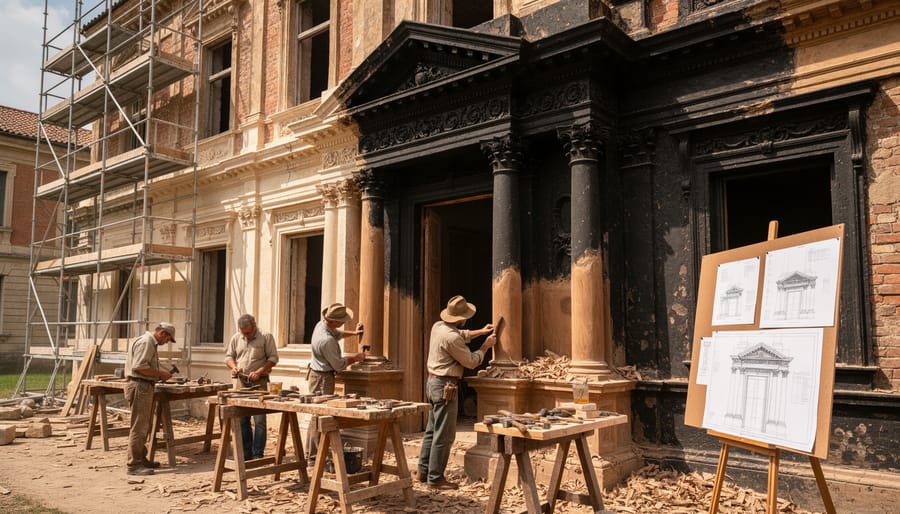
The cleaning process starts with careful documentation through photography and material sampling before any intervention begins. Conservators use specialized HEPA-filtered vacuums with variable suction controls to gently lift loose soot from textured surfaces like brick and carved wood. For more stubborn deposits, they employ dry chemical sponges—remarkably effective tools that look like oversized erasers—which absorb smoke residue without introducing moisture that could cause additional harm.
Water damage presents its own challenges, particularly when firefighting efforts have saturated wooden structural elements or archival materials. Teams deploy commercial dehumidifiers and establish controlled airflow to prevent mold growth, which can establish itself within 48 hours. Historic timbers receive anti-fungal treatments using solutions approved for heritage applications, ensuring they don’t alter the wood’s appearance or compromise future analysis.
Stone and masonry cleaning requires different approaches depending on the material’s porosity. Limestone, common in many 19th-century Canadian buildings, responds well to gentle washing with pH-neutral solutions, while sandstone may need poulticing—applying absorbent clays that draw out embedded contaminants. Throughout this process, conservators constantly test small, inconspicuous areas first, adapting techniques to each material’s unique response and maintaining meticulous records for future reference.
Reconstructing with Historical Accuracy
When flames subside and the initial shock passes, restoration teams face a profound responsibility: bringing a heritage site back to life while honoring its authentic character. This process transforms into a fascinating archaeological detective story, where every charred timber and fire-scarred stone holds clues to the building’s original form.
Restoration specialists begin by carefully documenting the fire scene itself. Dr. Margaret Chen, a heritage conservation architect based in Ottawa, explains that “even in destruction, there’s information. We photograph everything before moving a single piece of debris. Sometimes the way materials burned tells us about construction techniques that weren’t visible before the fire.”
Teams then dive into archival repositories, museums, and historical societies across the country. Original architectural drawings become treasure maps, though buildings rarely matched their blueprints exactly. Historical photographs prove invaluable, revealing details like paint colors, decorative moldings, and hardware placement that drawings omit. At the Notre-Dame Basilica in Montreal, after a devastating 1978 fire, researchers discovered crucial restoration details in amateur postcards and tourist snapshots from the early 1900s.
Archaeological excavation of fire sites often uncovers physical evidence buried beneath ash and debris. Foundation stones, nail patterns in charred wood, and fragments of original materials guide reconstruction. At Fort McMurray’s Heritage Park, researchers carefully sifted through fire damage to recover original hardware, glass fragments, and structural elements that informed rebuilding efforts.
The most challenging aspect involves balancing historical accuracy with modern safety codes. Teams must incorporate fire suppression systems, emergency exits, and structural reinforcements while maintaining visual authenticity. This requires creative problem-solving: hiding sprinkler systems within period-appropriate light fixtures, or reinforcing timber frames with concealed steel supports.
The process demands patience, often spanning years, but results in heritage sites that genuinely connect visitors to Canada’s past rather than presenting sanitized replicas.
Expert Perspectives: Interviews with Heritage Conservators
Dr. Marina Kowalski, lead conservator at the National Heritage Conservation Centre, still remembers the moment she first walked through the charred remains of a 19th-century fur trading post in northern Manitoba. “The smell hits you first—that acrid combination of burnt wood and water damage,” she recalls. “But then you start seeing fragments: a partially intact ledger book, glass trade beads melted into the floorboards. Each artifact tells us what we can save and what we’ve lost forever.”
Her experience reflects the delicate balance heritage conservators face when approaching fire-damaged sites. Pierre Duchamp, an archaeological consultant who worked on the restoration of a historic Acadian church following a devastating 2018 fire, describes the decision-making process as “archaeological triage.” He explains that teams must quickly assess which elements are structurally salvageable and which artifacts require immediate stabilization to prevent further deterioration. “We had 48 hours to document and remove sacred objects before weather exposure would have destroyed them completely,” Duchamp shares.
Perhaps surprisingly, these specialists often discover hidden treasures during restoration work. Sarah Chen, a museum conservator specializing in wooden structures, recalls finding original 1840s newspaper insulation within fire-damaged walls at a Toronto heritage home. “The fire exposed construction techniques and materials we never knew existed,” she notes. “Sometimes destruction reveals secrets that meticulous preservation would never have uncovered.”
The consensus among these experts is clear: every fire-damaged heritage site presents unique challenges requiring collaborative problem-solving. As Dr. Kowalski emphasizes, “There’s no handbook that tells you exactly how to restore a 200-year-old building touched by flame. You’re constantly weighing historical authenticity against safety requirements, community needs against preservation standards.” Their collective wisdom has shaped modern Canadian conservation protocols, transforming tragedy into opportunity for deeper understanding of our shared heritage.
Visiting Restored Heritage Sites: A Travel Itinerary
Eastern Canada: From Parliament Hill to Maritime Forts
Eastern Canada’s heritage landscape tells remarkable stories of resilience, nowhere more evident than in sites that have risen from the ashes. Ottawa’s Parliament Hill Centre Block, though its devastating 1916 fire predates modern restoration techniques, set the precedent for how Canadians approach heritage reconstruction—balancing historical accuracy with contemporary safety standards. The rebuilt Peace Tower became a symbol of national determination.
In Quebec, the Château Saint-Louis archaeological site beneath the Dufferin Terrace offers visitors a glimpse into restoration archaeology. Following various fires throughout its history, excavations revealed foundation walls and artifacts that now form part of interpretive displays. For those planning an archaeological tour through Quebec City, Pointe-à-Callière museum showcases how fire-damaged historical layers are preserved and presented to the public.
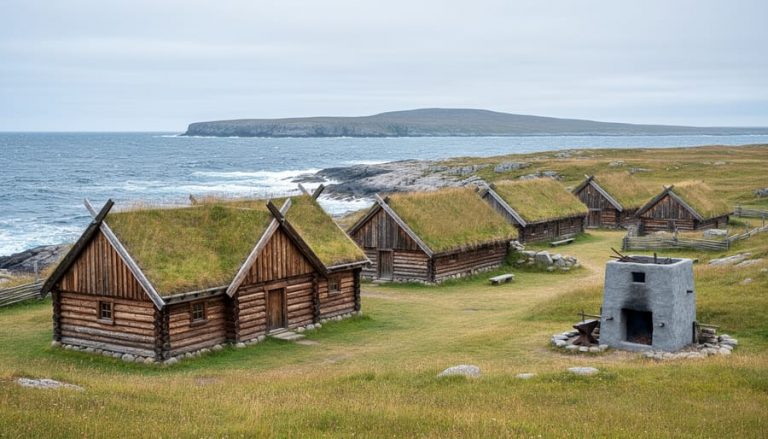
The Maritime provinces hold their own restoration treasures. Nova Scotia’s Fortress of Louisbourg experienced multiple fires during its active military period and subsequent abandonment. Parks Canada’s multi-decade reconstruction project, beginning in the 1960s, employed archaeological evidence and historical records to authentically recreate buildings destroyed by both conflict and fire.
Dr. Margaret Chen, heritage architect with Parks Canada, explains: “Eastern Canada’s restoration projects demonstrate how fire damage, while catastrophic, can reveal hidden historical details. Charred timbers tell us about construction methods, while ash layers help date structural changes.” These sites invite visitors to witness how disaster becomes opportunity for deeper historical understanding.
Western Heritage: Prairie to Coast Restorations
Western Canada’s resilient heritage tells powerful stories of communities rebuilding after devastating fires. From the prairie grasslands to the Pacific coast, several meticulously restored sites invite visitors to witness how traditional craftsmanship and modern conservation techniques can bring history back to life.
In Saskatchewan, the Cannington Manor Provincial Park showcases the remarkable restoration of an 1880s English settlement decimated by a 1970s fire. The rebuilt All Saints Anglican Church stands as a testament to Victorian-era prairie architecture, with conservators matching original lime-based mortars and hand-hewn timber techniques. According to restoration architect Margaret Chen, who supervised the 2012-2014 reconstruction, “We sourced materials from historical quarries and trained local craftspeople in 19th-century joinery methods to ensure authenticity.”
British Columbia’s Fort Steele Heritage Town presents another triumph over fire. After a 2003 blaze destroyed several structures in this recreated 1890s boomtown, preservationists implemented cutting-edge fire suppression systems while maintaining historical aesthetics. Visitors can explore the North Star Hardware building and Kershaw General Store, both rebuilt using salvaged materials and period-accurate construction methods.
The Ukrainian Cultural Heritage Village near Edmonton offers a particularly moving restoration story. Following a 1998 fire that damaged the Shandro House, conservation teams employed traditional clay-and-straw construction techniques passed down through generations. Today’s visitors can observe ongoing preservation demonstrations while exploring thirty historical buildings that survived or were authentically restored, creating an immersive journey through prairie immigrant life.
These sites welcome travelers year-round, with guided tours revealing both historical narratives and the fascinating science behind heritage restoration.
Prevention and Preparedness: Protecting Canada’s Archaeological Heritage
The future of Canada’s archaeological heritage increasingly depends on proactive measures that address both traditional fire risks and emerging threats from climate change. As summers grow hotter and drier across the country, heritage professionals are racing to implement comprehensive protection strategies before the next disaster strikes.
Modern fire prevention at heritage sites begins with sophisticated early warning systems. Many significant properties now feature smoke detection networks specifically designed for historic structures, using air-sampling technology that can identify combustion particles before flames appear. At remote archaeological sites, particularly those in British Columbia’s interior and Alberta’s foothills, fire weather monitoring stations provide real-time data to emergency coordinators who can initiate evacuation protocols or deploy protective measures when conditions deteriorate.
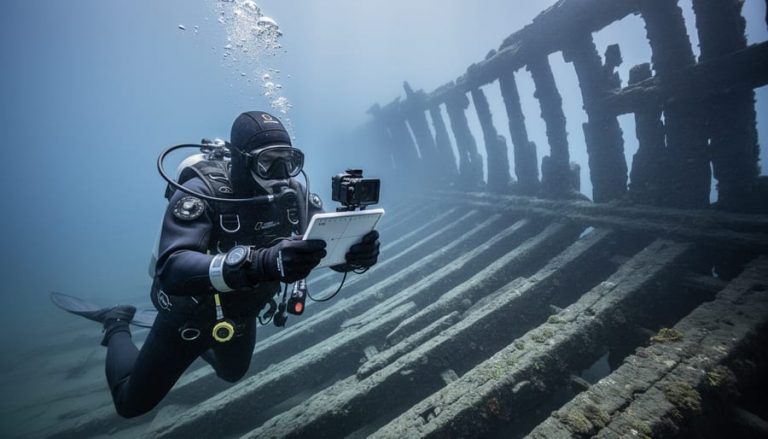
Digital documentation has emerged as a crucial insurance policy for irreplaceable heritage. Dr. Sarah Chen, a conservation architect with Parks Canada, explains the urgency: “We’re creating digital twins of vulnerable sites using photogrammetry, 3D laser scanning, and ground-penetrating radar. If fire destroys a structure, we have precise records for reconstruction.” This technology proved invaluable after the 2016 Fort McMurray wildfires, where digital archives helped prioritize restoration efforts at damaged historic buildings.
Emergency response planning now incorporates lessons learned from recent disasters. Heritage sites across Canada maintain detailed evacuation plans for artifacts, pre-established agreements with conservation facilities, and trained rapid-response teams. Some properties have installed sprinkler systems adapted to protect delicate historic materials, while others maintain defensible space through strategic vegetation management that respects archaeological integrity.
Climate change compounds these challenges exponentially. The 2021 British Columbia heat dome and subsequent fires demonstrated how extreme weather events can overwhelm even well-prepared sites. Indigenous communities, whose ancestral sites face disproportionate risk in remote locations, are leading innovative approaches that combine traditional fire management practices with contemporary technology. These collaborative efforts offer hope that Canada’s archaeological treasures might weather the storms ahead, preserving tangible connections to our shared past for future generations to explore and cherish.
The restoration of fire-damaged heritage sites across Canada tells a profound story about our collective commitment to preserving the threads that connect us to our past. Each carefully reconstructed timber, every painstakingly restored artifact, and all the countless hours dedicated by preservation professionals represent more than technical achievement—they embody our determination to safeguard the tangible evidence of who we are and where we’ve come from.
As Dr. Margaret Chen, senior conservator at Parks Canada, shared during our interview, “Every restoration project teaches us something new about resilience—both of the structures themselves and of the communities that refuse to let their stories disappear.” This dedication continues despite ongoing challenges: limited funding, increasingly severe climate conditions, and the race against time as materials deteriorate and specialized knowledge becomes scarce.
The lessons learned from fire restoration extend beyond conservation techniques. They remind us that heritage sites aren’t merely buildings or objects—they’re living connections to the generations before us and gifts to those who’ll follow. When we witness a site rising from the ashes, we’re reminded that our archaeological legacy deserves active protection, not passive appreciation.
Consider visiting these restored sites yourself. Walk through their halls, touch their reconstructed walls, and support the ongoing conservation work through donations or volunteer efforts. Whether you’re exploring the rebuilt quarters of a historic fort or admiring carefully preserved artifacts salvaged from flames, you’re participating in something larger than tourism—you’re joining a continuum of stewardship that ensures these irreplaceable treasures endure for future generations to experience, study, and cherish.


+ There are no comments
Add yours