
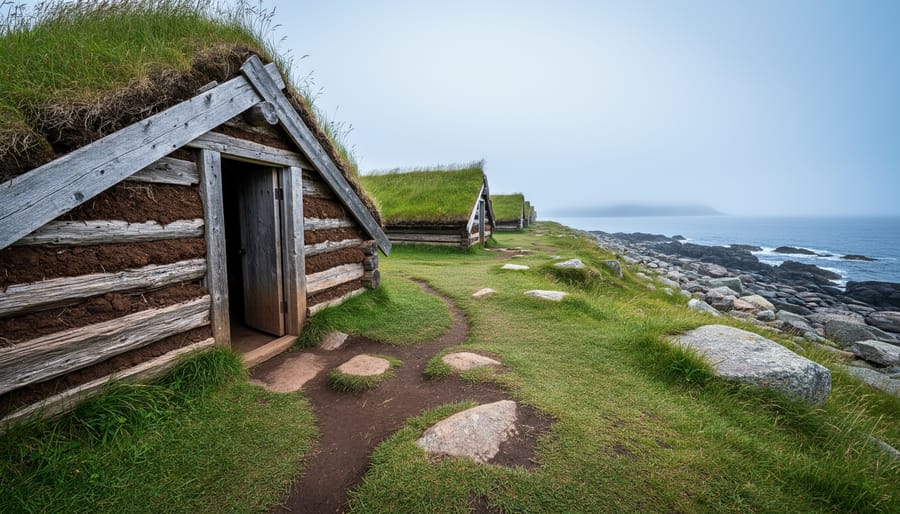
L’Anse aux Meadows National Historic Site stands as the only confirmed Norse settlement in North America, a windswept collection of reconstructed sod buildings on Newfoundland’s northern tip where Vikings established a foothold roughly 500 years before Columbus. If you’re planning a visit in 2026, expect a journey to one of Canada’s most remote UNESCO World Heritage Sites, accessible via a scenic four-hour drive from the Viking Trail or a regional flight to St. Anthony followed by a 45-minute transfer. The site rewards those who make the trek with something rare: authenticated proof that Norse explorers reached the New World around 1000 CE.
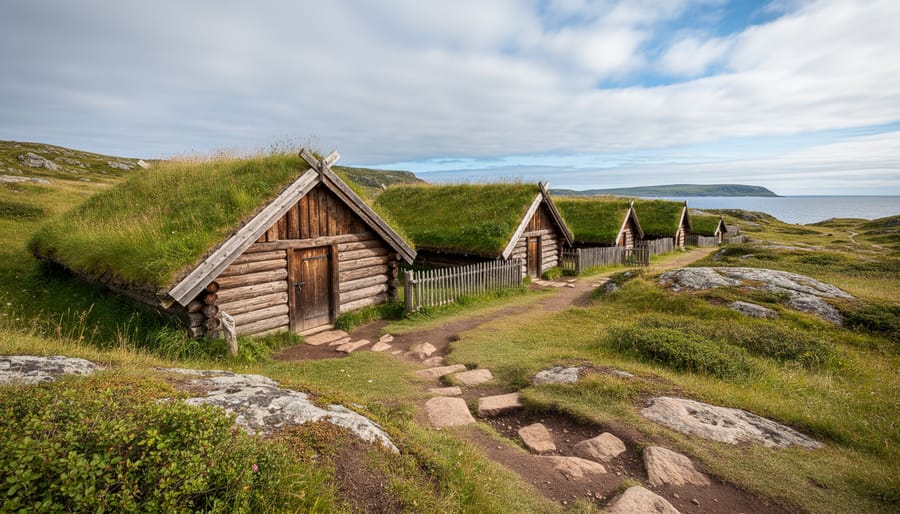
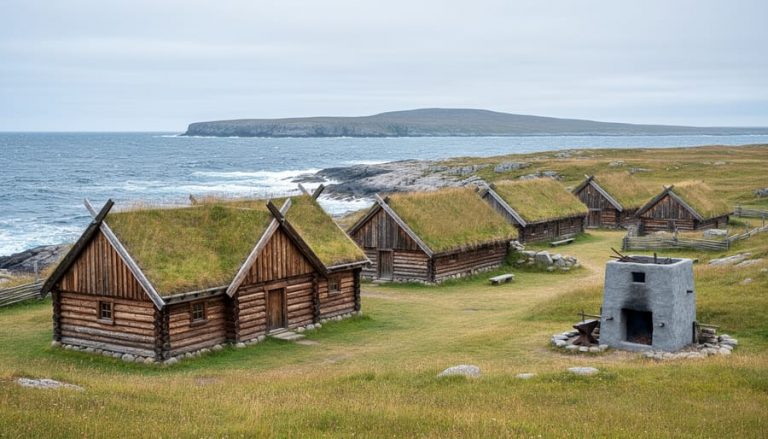
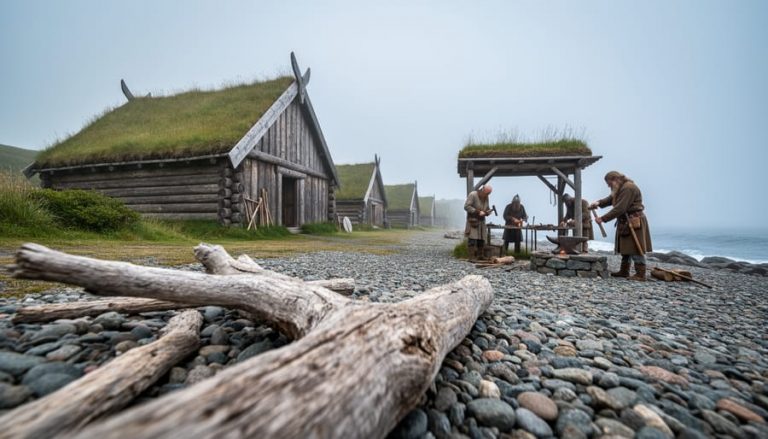
The eight timber-framed structures you’ll encounter aren’t the originals. Those collapsed into peat bogs centuries ago. What archaeologists Helge and Anne Stine Ingstad unearthed in the 1960s were post holes, iron nails, and a bronze ring-headed pin that shattered long-held assumptions about pre-Columbian contact. Parks Canada has since rebuilt three buildings based on archaeological evidence, staffing them with costumed interpreters who demonstrate iron smelting and wool spinning using period techniques.
Visiting between June and September offers the best weather and full access to interpretive programs, though the site’s dramatic coastal setting takes on an almost mythic quality when fog rolls in from the Strait of Belle Isle. Most travelers allocate a full day here, combining the indoor exhibits explaining Norse navigation and daily life with outdoor exploration of the building remains and coastal trails. This isn’t a place you stumble upon by accident. Getting here requires intention, but that remoteness preserves exactly what makes L’Anse aux Meadows extraordinary: an authentic connection to the moment when two worlds first collided on these shores.
The Norse Settlement That Rewrote History
What the Vikings Left Behind
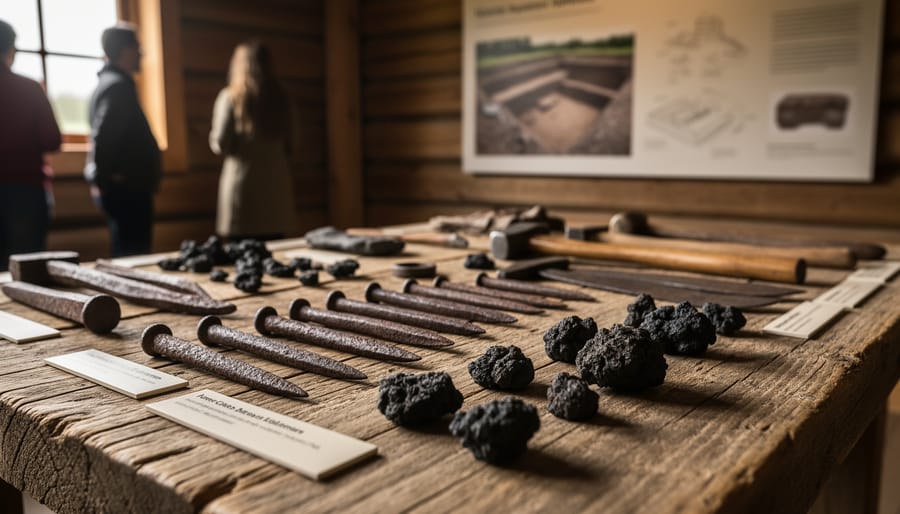
The archaeological evidence at L’Anse aux Meadows tells a remarkably detailed story of Norse life circa 1000 CE. The site contains eight distinct structures: three dwelling halls, one forge, and four workshops, all built using the same sod-over-wood construction methods the Norse employed in Greenland and Iceland. These weren’t temporary shelters but substantial buildings, with the largest hall measuring roughly 28.8 by 15.6 metres, featuring multiple rooms and a central hearth.
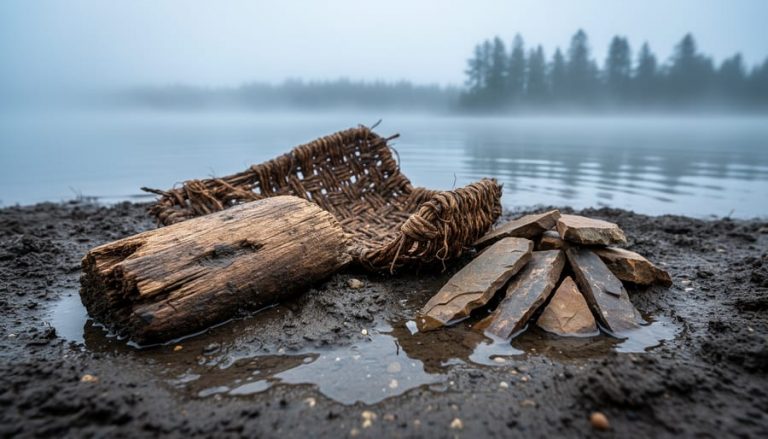
What makes this site irrefutably Norse rather than Indigenous is the unmistakable collection of artifacts:
- Iron boat nails identical to those found in Viking Age Scandinavia
- A bronze cloak pin of distinctly Norse design
- A stone oil lamp matching Icelandic examples from the period
- Worked iron rivets and nail fragments
- A spindle whorl used for spinning wool, suggesting women were present
- Butternuts and butternut wood, which don’t grow this far north, proving voyages to warmer regions
The forge building revealed something extraordinary: evidence of iron smelting from local bog iron. The Norse weren’t just visiting; they were producing the nails and rivets needed for boat repairs. Archaeologists found iron slag, charcoal, and roasted bog ore exactly where you’d expect in a working smithy.
Daily life traces include discarded food remains, bone needles, and worked wood fragments. The buildings show deliberate planning, with the largest structures positioned to shelter smaller workshops from the prevailing winds. Yet the site also reveals its temporary nature. Unlike permanent Norse settlements in Greenland, there’s minimal accumulated refuse, suggesting occupation lasted perhaps a decade or two rather than generations. The Vikings came, worked, explored the coastline to the south, then departed, leaving behind just enough evidence to prove they’d been here first.
Why This Remote Corner of Newfoundland?
The Norse didn’t stumble onto this northwestern tip of Newfoundland by accident. L’Anse aux Meadows sits at a geographic crossroads that would have been immediately recognizable to Viking navigators as valuable real estate.
The site occupies a protected cove where Épine Blanche Bay meets the Strait of Belle Isle, the narrow passage separating Newfoundland from Labrador. For sailors accustomed to island-hopping across the North Atlantic, this location offered everything a base camp needed: a sheltered harbor for beaching their shallow-draft knarrs, freshwater streams, meadows for livestock, and timber within reach. The northern exposure gave clear sightlines for approaching ships, while the strait itself funneled marine traffic past their doorstep.
Archaeological evidence suggests the Norse used L’Anse aux Meadows as a staging point rather than a permanent colony. The buildings show occupation for perhaps a decade, maybe less. This aligns with descriptions in the Vinland sagas of explorers venturing south to gather timber, grapes, and other resources not available in Greenland. The site’s location makes sense as a repair station and winter camp where crews could refit ships, process timber, and wait out storms before pushing deeper into unknown waters.
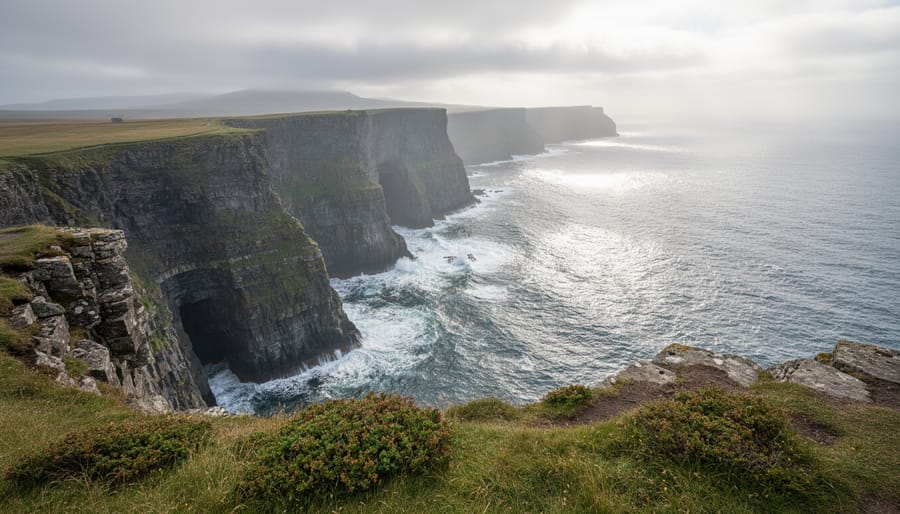
The Strait of Belle Isle also provided something less tangible but equally important: a navigational landmark. In an age before accurate maps, distinctive coastal features meant survival. The dramatic headlands and the strait’s funnel shape would have been impossible to miss when sailing down from Greenland’s southern tip.
Planning Your Visit to L’Anse aux Meadows National Historic Site
Getting There: Transportation Options for 2026
Reaching L’Anse aux Meadows National Historic Site requires commitment, but the journey itself becomes part of the adventure. The site sits at Newfoundland’s northern tip, roughly 1,200 kilometers from St. John’s and 450 kilometers from Deer Lake.
Most visitors fly into one of two airports. St. John’s International Airport serves as Newfoundland’s main hub with daily connections from major Canadian cities and seasonal international flights. From St. John’s, you face an 8 to 9 hour drive north. Deer Lake Regional Airport offers a more practical option, cutting drive time to roughly 4.5 to 5 hours. Air Canada, WestJet, and Porter Airlines operate regular service to Deer Lake from Halifax, Toronto, and Montreal throughout the 2026 season.
From either airport, Route 430, known as the Viking Trail, carries you north through Gros Morne National Park and along the coastline. The highway is well-maintained and fully paved, though cell service becomes spotty north of Port au Choix. Gas stations appear regularly until Hawke’s Bay, after which you’ll find limited services until St. Anthony.
If you’re driving from Deer Lake, plan for these segments: Deer Lake to Gros Morne National Park visitor centre (1.5 hours), Rocky Harbour to Port au Choix (1.5 hours), and Port au Choix to St. Anthony (2 hours). From St. Anthony, L’Anse aux Meadows National Historic Site lies 40 kilometers north, a final 35-minute drive.
Budget extra time for photo stops. The Viking Trail delivers stunning coastal vistas, fishing villages, and wildlife sightings including moose, caribou, and in early summer, icebergs drifting past the shore.
Car rental is essential unless you book a guided tour from St. John’s or Deer Lake. Several tour operators offer multi-day packages that handle all transportation, though independent travel gives you flexibility to explore the Great Northern Peninsula at your own pace. Book rentals early for summer 2026, as demand exceeds supply during peak season.
Where to Stay Near the Site
Finding comfortable lodging near L’Anse aux Meadows requires planning ahead, as this remote corner of Newfoundland offers limited but genuinely welcoming options. Most visitors base themselves in St. Anthony, about 40 kilometres south, which has the region’s most developed accommodations. The town’s hotels and inns typically run $120-180 per night in 2026, with amenities like wifi and restaurants that travelers appreciate after a long day exploring.
For those who want to wake up closer to the Viking site, St. Lunaire-Griquet sits just five kilometres away and offers several bed-and-breakfasts and guesthouses. These smaller properties charge roughly $90-140 per night and give you a more intimate glimpse of outport Newfoundland life. The hosts often share local knowledge that enhances your visit.
Budget-conscious travelers should look at vacation rentals and cottages scattered throughout the peninsula, with options starting around $75 per night. Book early, June through August sees the heaviest traffic, and choices thin out quickly.
Wherever you stay, don’t expect luxury resorts. What you get instead is authentic Newfoundland hospitality in communities that understand what drew you here. Many accommodations serve hearty breakfasts featuring local cod, homemade bread, and strong coffee, fuel you’ll need before heading to the archaeological site. The nearest accommodations to L’Anse aux Meadows fill months ahead during peak season, so securing your room when you book your flights makes sense. Most properties stay open May through September only.
What You’ll Experience at the Site
The Visitor Centre and Museum Exhibitions
The interpretation centre serves as your gateway to understanding the Norse presence in North America, housing artifacts excavated from the site since the 1960s. You’ll encounter iron boat rivets, a bronze cloak pin, a spindle whorl carved from soapstone, and fragments of worked wood, everyday items that Vikings brought to this shore over a millennium ago. These aren’t replicas; they’re the actual objects that Helge and Anne Stine Ingstad unearthed during their groundbreaking excavations.
Interactive displays explain how archaeologists determined the age of the settlement and distinguished Norse construction techniques from Indigenous building methods. Touch-screen presentations map out the wider Viking exploration network, connecting L’Anse aux Meadows to Iceland, Greenland, and Scandinavia. A detailed scale model shows how the eight Norse buildings would have appeared when occupied, complete with turf roofs and timber frames.
Parks Canada offers guided heritage presentations throughout the summer months in 2026, typically running from mid-May through early October. These 45-minute sessions, led by interpreters versed in Norse history, dig into topics like Viking navigation techniques, iron smelting processes, and the saga accounts that mentioned Vinland. Check the current schedule when you arrive, as presentation times vary by season.
The theatre screens a 15-minute documentary that sets the archaeological discovery in historical context, explaining why this remote Newfoundland site matters globally. Budget at least 90 minutes to absorb the centre’s offerings before heading out to walk the actual archaeological landscape.
Walking the Archaeological Site
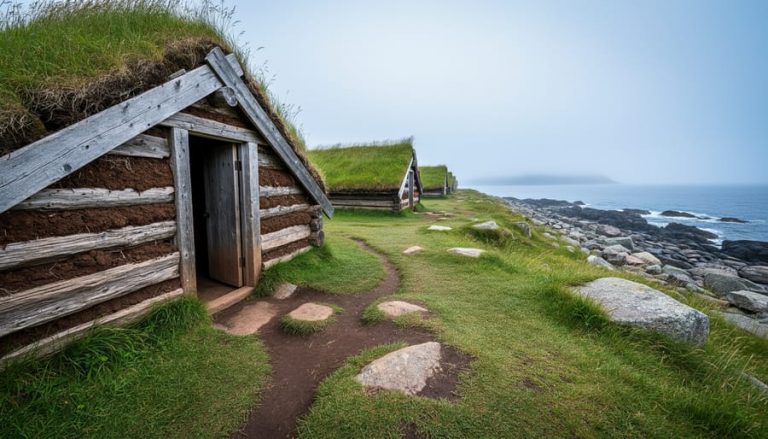
Stepping onto the grassy terrace overlooking Epaves Bay, you’ll immediately notice eight shallow depressions in the ground, these are the original Viking house sites, carefully preserved exactly where Norse builders excavated them over a thousand years ago. Parks Canada has reconstructed three sod buildings nearby to show you what stood here around 1000 CE, but walking between the actual archaeological depressions is where the history becomes tangible.
Start at the largest depression, measuring roughly 20 by 15 meters. This was the great hall where Norse explorers ate, slept, and made decisions about further exploration. Notice how the builders positioned it for protection from prevailing winds while maintaining clear views of the bay, Viking practicality combined with strategic thinking.
The reconstructed buildings nearby demonstrate Norse construction techniques: thick sod walls layered over wooden frames, low doorways to preserve heat, and interior spaces dark except for the central hearth. Step inside the largest reconstruction and you’ll understand immediately why the Norse needed substantial structures in this harsh climate. The musty smell of peat and earth transports you back.
As you walk the circuit trail, interpretive panels explain what archaeologists found in each location, the forge where iron was worked, the smaller dwellings that likely housed different family groups, the carpentry workshop filled with wood shavings and cut nails. The entire site covers roughly three hectares, and the 30-minute walk reveals how this wasn’t just a temporary camp but a genuine settlement built for an extended stay.
Expert Insights: An Archaeologist’s Perspective
Dr. Catherine Walsh has spent the better part of two decades studying Norse expansion across the Atlantic, and she still gets animated when discussing L’Anse aux Meadows National Historic Site. As a senior archaeologist with Parks Canada, she oversees ongoing research at the site and regularly fields questions from visitors who assume the excavations finished decades ago.
“People think we’ve learned everything there is to know, but that’s far from true,” Walsh explains during our conversation at the site’s research facility. “Every few years, new analytical techniques reveal details we couldn’t detect before. We recently re-examined iron fragments using advanced metallurgy, and they confirmed the Norse were processing bog iron right here, which tells us about the duration and nature of their stay.”
What makes L’Anse aux Meadows National Historic Site unique isn’t just its status as the only confirmed Norse settlement in North America. Walsh points to its preservation: “The peat and acidic soil created perfect conditions. We have organic materials, wood fragments, worked bone, things that simply don’t survive at most archaeological sites. That level of preservation gives us an unusually complete picture of daily life.”
Recent research has shifted how archaeologists interpret the site’s purpose. “We used to think of it primarily as a winter camp,” Walsh notes, “but the evidence suggests something more sophisticated, a staging ground for exploring further south, a repair station for ships, possibly a trade node. The Norse were here for several years, not just one season.”
She dismisses romantic notions about massive settlements. “This was never meant to be permanent. The Norse were pragmatic. They came, explored, extracted resources like timber and iron, and when it no longer served their purposes, they left. That calculated approach is part of what makes studying L’Anse aux Meadows National Historic Site so fascinating, it reveals how methodically they approached transatlantic exploration a full five centuries before Columbus.”
Beyond L’Anse aux Meadows: Extending Your Norse Heritage Journey
Your visit to L’Anse aux Meadows gains deeper context when you explore the Great Northern Peninsula’s other Norse heritage sites. The region offers several compelling stops that bring Viking-era exploration to life in different ways.
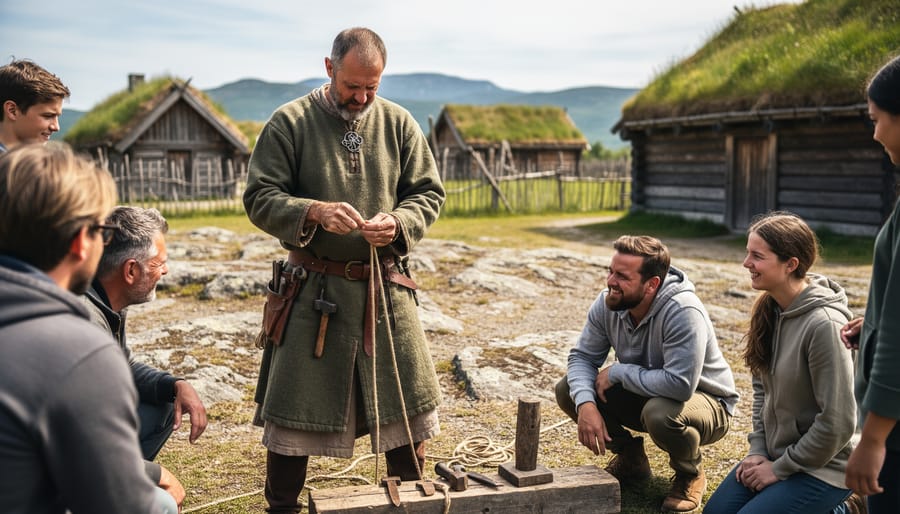
Just a few kilometers from the historic site, Norstead Viking Village provides hands-on immersion into Norse daily life. This reconstructed settlement features full-scale Viking buildings where costumed interpreters demonstrate blacksmithing, weaving, and navigation techniques. You can step aboard a replica knarr (trading vessel) and handle period tools. While L’Anse aux Meadows shows you archaeological evidence, Norstead lets you experience how Vikings actually lived and worked.
The Viking Trail (Route 430) itself rewards unhurried exploration. Port au Choix National Historic Site, roughly 150 kilometers south, reveals Indigenous cultures that thrived here thousands of years before Norse arrival. The contrast illuminates how different peoples adapted to this challenging landscape. Gros Morne National Park, a UNESCO site like L’Anse aux Meadows, offers dramatic fjords and geological wonders that underscore why this coastline attracted explorers.
In St. Anthony, the Grenfell Historic Properties tell later chapters of northern Newfoundland’s story, while local boat tours may take you past iceberg alley and whale feeding grounds the Norse would have navigated.
Consider spending three to five days on the peninsula rather than rushing to L’Anse aux Meadows alone. The region’s small museums, coastal trails, and fishing villages provide rhythm to your journey. Early mornings at these less-visited sites often mean you’ll have exhibits to yourself, creating space for genuine reflection on the layers of human history embedded in this remote corner of North America.
Practical Tips for Visiting in 2026
Admission to L’Anse aux Meadows National Historic Site in 2026 costs $7.90 for adults (ages 18-64), with reduced rates for seniors ($6.90) and youth (17 and under enter free). Parks Canada Discovery Pass holders receive free entry, making the annual pass a smart investment if you’re visiting multiple national sites during your Newfoundland trip. The site is open from early June through early October, with extended hours during July and August when costumed interpreters are most active.
Plan at least three hours for a meaningful visit, two hours to tour the reconstructed buildings and archaeological site, and another hour for the interpretation centre. Serious history enthusiasts often spend half a day here, especially when demonstrations are scheduled. The coastal weather shifts rapidly, so dress in layers and bring waterproof gear even on sunny mornings. Sturdy walking shoes are essential for navigating the grassy paths between buildings and the sometimes muddy archaeological areas. A hat and sunscreen matter too, as much of the site offers little shade.
Is L’Anse aux Meadows wheelchair accessible?
The visitor centre and interpretation exhibits are fully accessible, but the outdoor archaeological site presents challenges with uneven terrain and grassy paths that can be difficult for wheelchairs or mobility aids, particularly after rain.
Can I take photographs inside the reconstructed Norse buildings?
Photography is permitted throughout the site, including inside the sod buildings, though flash photography may be restricted in certain exhibit areas of the visitor centre to protect artifacts.
Are there food services available at the site?
No restaurant or café operates on-site, so pack snacks and water for your visit. The nearest restaurants are in St. Lunaire-Griquet and St. Anthony, roughly 5 and 40 kilometres away respectively.
Cell service is limited to non-existent at the site, so download any maps or information before arriving. The gift shop stocks excellent books on Norse exploration and locally made crafts if you want meaningful souvenirs beyond the standard postcards.
Standing at L’Anse aux Meadows National Historic Site, you’re not just visiting another historical landmark. You’re standing on ground that fundamentally rewrote what we knew about North American history. Five centuries before Columbus, Norse explorers crossed the Atlantic, built workshops and dwellings on this windswept shore, and proved that European contact with the Americas began far earlier than our textbooks once taught.
What makes this place extraordinary isn’t just its age. It’s the tangible connection to a moment when courage and curiosity drove people across an ocean into the unknown. The reconstructed sod buildings, the archaeological depressions, the artifacts recovered from this soil, they transform saga stories into verified history and remind us that our understanding of the past continues to evolve with each discovery.
The remoteness that likely appealed to those Norse settlers a thousand years ago remains part of the site’s power today. Getting here requires commitment, but that journey makes the experience richer. Walking across this coastal headland, watching fog roll in from the Strait of Belle Isle, you feel the same Atlantic winds that filled Viking sails.
L’Anse aux Meadows National Historic Site rewards those who make the journey north. It offers something rare: a place where archaeology, landscape, and human ambition converge to tell a story that changed how we see our past. Don’t just read about it. Experience it yourself.

+ There are no comments
Add yours