
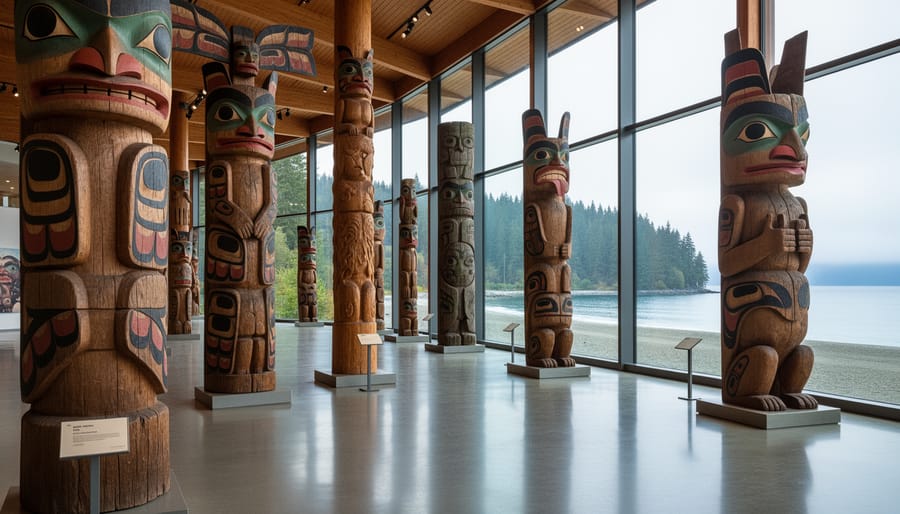
Vancouver’s museum landscape rivals any major Canadian city, housing collections that span 10,000 years of Pacific Northwest heritage alongside world-class contemporary exhibitions. The Museum of Anthropology at UBC alone preserves over 535,000 archaeological objects, including the world’s most comprehensive collection of Northwest Coast First Nations artifacts. Meanwhile, Science World’s distinctive geodesic dome has welcomed over 20 million visitors since 1986, making it one of Canada’s most visited science centers.
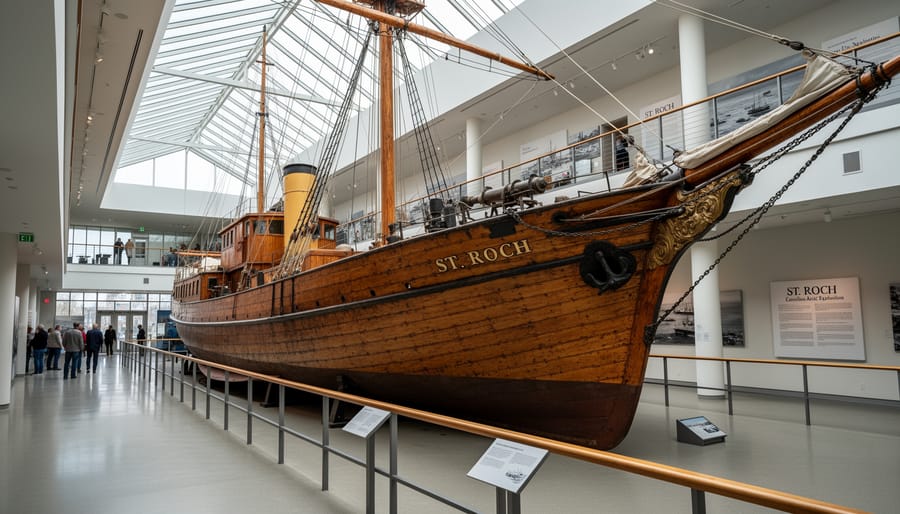
These institutions matter beyond their architectural presence. The Museum of Vancouver chronicles urban transformation through archaeological digs that unearthed Musqueam village sites dating to 3,000 BCE, revealing continuous Indigenous occupation beneath the modern cityscape. The Vancouver Maritime Museum guards the RCMP schooner St. Roch, the first vessel to navigate the Northwest Passage in both directions, offering tangible connections to Arctic exploration history that shaped Canadian sovereignty.
Lesser-known treasures deserve equal attention. The Beaty Biodiversity Museum houses a complete blue whale skeleton, while the Vancouver Police Museum occupies the city’s original morgue and autopsy facilities, preserving forensic history through authentic crime scene artifacts. Each venue offers distinct archaeological and cultural narratives unavailable elsewhere in Canada.
Planning requires strategic timing. Summer crowds swell popular institutions, but visiting Tuesday through Thursday mornings provides intimate access to collections and impromptu conversations with curators who frequently walk exhibition floors.
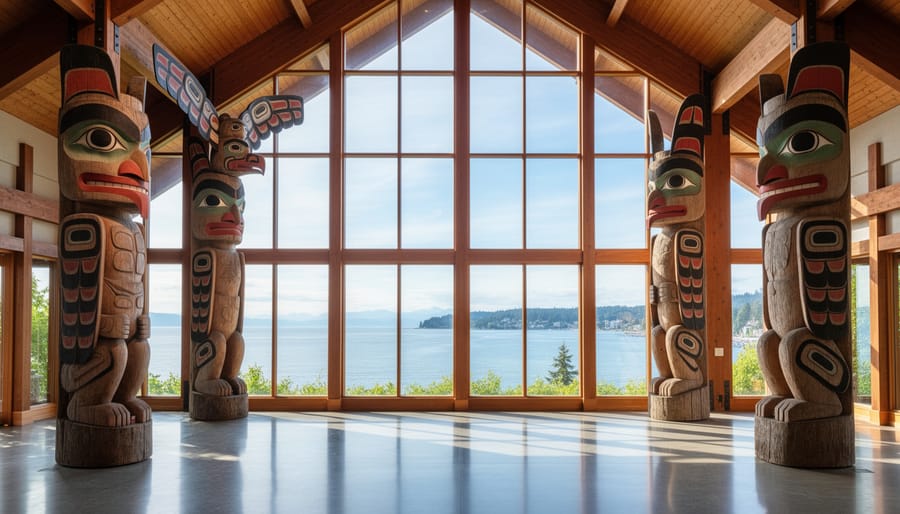
Museum of Anthropology: Where Coast Salish Heritage Comes Alive
The Visible Storage Revolution
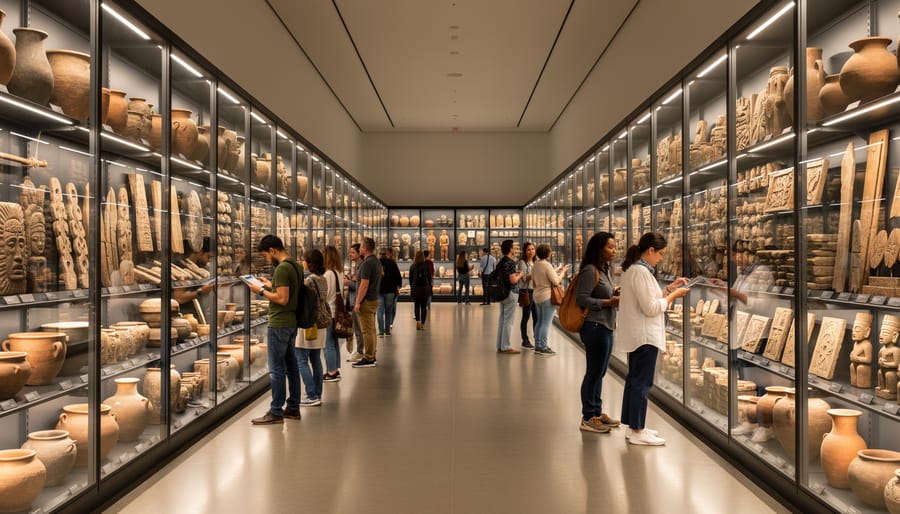
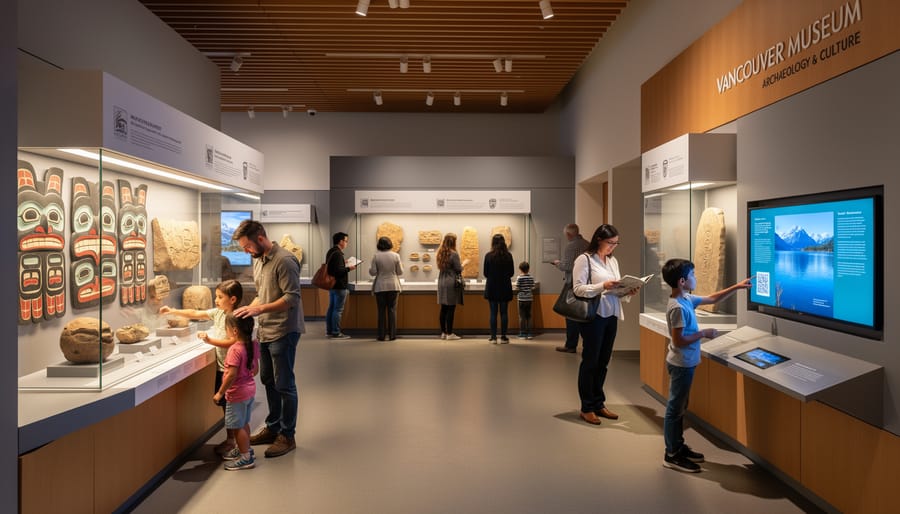
Walking through the Museum of Anthropology, you’ll encounter something radically different from traditional museum displays: visible storage galleries where roughly 9,000 objects remain accessible to public view. Rather than hiding artifacts in climate-controlled vaults, MOA pioneered an approach that transforms the museum’s entire collection into a learning opportunity.
Floor-to-ceiling glass cases reveal drawer after drawer of archaeological treasures—ceremonial masks, ancient tools, pottery fragments, and textiles from cultures spanning the globe. This democratic approach to curation means a student researching Coast Salish basketry can examine dozens of examples side-by-side, while casual visitors might stumble upon unexpected connections between cultures separated by oceans and centuries.
Dr. Jennifer Kramer, MOA’s curator of Pacific ethnology, explains the philosophy: “Visible storage challenges the colonial notion that experts alone decide what’s worthy of display. Communities want to see their cultural heritage, researchers need comparative access, and the public deserves transparency about what museums actually hold.” This methodology has influenced institutions worldwide, but MOA remains the most comprehensive example.
The visible storage experience requires patience—there are no dramatic spotlights or interpretive panels for every object. Instead, you become an active researcher, peering into drawers, reading collection tags, and making your own discoveries. Budget at least an hour here; archaeology enthusiasts often spend entire afternoons tracing cultural connections through the systematic displays, finding stories that traditional exhibits might never tell.
Museum of Vancouver: Archaeology Beneath the City
Beneath the gleaming glass towers and bustling streets of modern Vancouver lies a far older story, one that stretches back 10,000 years through layers of earth and time. The Museum of Vancouver preserves this remarkable chronicle through its archaeological collections, offering visitors an intimate connection to the countless generations who called this coastal landscape home long before the city took shape.
The museum’s archaeological holdings represent one of Canada’s most significant urban collections, with artifacts numbering in the tens of thousands. The crown jewel remains the assemblage from the ancient Musqueam village site, where continuous habitation spanning millennia has yielded everything from stone tools and carved implements to ceremonial objects that speak to sophisticated cultural practices. These aren’t mere curiosities preserved behind glass—they’re tangible links to living communities whose descendants continue to steward these lands today.
“What makes our archaeological program unique is the urban context,” explains Dr. Jennifer Marshall, the museum’s former curator of archaeology. “We’re documenting how people adapted to this specific environment over thousands of years, and how those patterns changed with colonization and city-building.” Her insights illuminate the collection’s dual nature: it preserves both Indigenous heritage and the transformative impacts of settler urbanism.
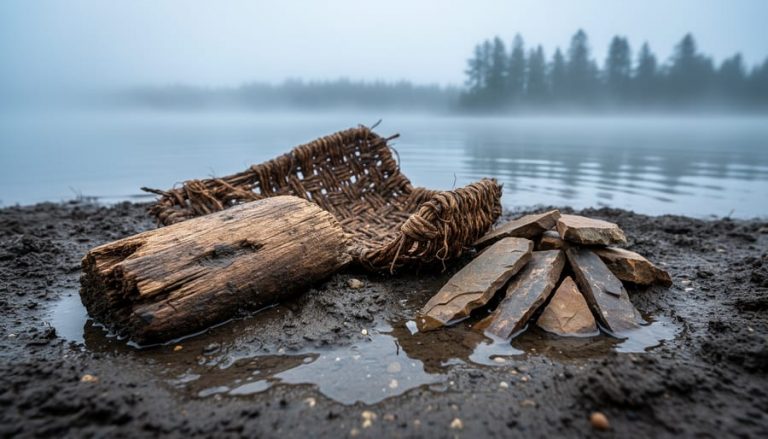
The permanent exhibition “c̓əsnaʔəm: the city before the city” deserves particular attention from archaeology students and heritage professionals. This groundbreaking display centers Musqueam perspectives in telling their own story, featuring over 300 artifacts alongside contemporary voices. Visitors encounter fishing weights worn smooth by the Fraser River’s currents, intricate basketry fragments that demonstrate remarkable craftsmanship, and projectile points that reveal changing hunting technologies across millennia.
Rotating exhibitions frequently showcase urban archaeology discoveries from construction sites throughout Vancouver. Recent displays have featured Victorian-era household goods from Gastown excavations and Chinese ceramics from early Chinatown, illustrating the city’s multicultural foundations. These finds transform construction zones into archaeological windows, revealing the everyday lives of Vancouver’s more recent inhabitants.
Plan at least two hours to fully engage with the archaeological galleries. The museum offers guided tours on weekends that provide deeper context about excavation methods and artifact interpretation. Photography is permitted in most areas, making this an excellent resource for educators and students documenting their research.
Vancouver Maritime Museum: Naval Archaeology and Polar Exploration
Perched on the shores of English Bay in Vanier Park, the Vancouver Maritime Museum offers an intimate journey through Canada’s naval history and Arctic exploration legacy. At the heart of this collection stands the St. Roch, a restored Royal Canadian Mounted Police schooner that made history as the first vessel to navigate the Northwest Passage in both directions. Built in 1928 specifically for Arctic patrols, this National Historic Site vessel now rests within a protective A-frame structure where visitors can board the ship and walk its cramped quarters, imagining life during those treacherous polar voyages.
The museum’s maritime archaeology collections reveal fascinating chapters of Canada’s seafaring past. Expert curator Joanna Harris explains during guided tours how preservation techniques allow fragments of wooden hulls, navigational instruments, and personal effects to tell stories that written records often miss. These artifacts transform abstract historical accounts into tangible human experiences, particularly through the museum’s extensive Franklin Expedition materials. The doomed 1845 search for the Northwest Passage left archaeological traces that continue surfacing across the Arctic, and this museum contextualizes those discoveries within broader exploration narratives.
Arctic expedition artifacts on display include:
- Hand-drawn navigation charts from 1850s search expeditions
- Preserved leather boots and clothing adapted for extreme polar conditions
- Indigenous Inuit kayak models demonstrating superior Arctic vessel design
- Communication equipment and signal flags used during ice-locked winters
- Ship’s logs documenting daily survival challenges in frozen waters
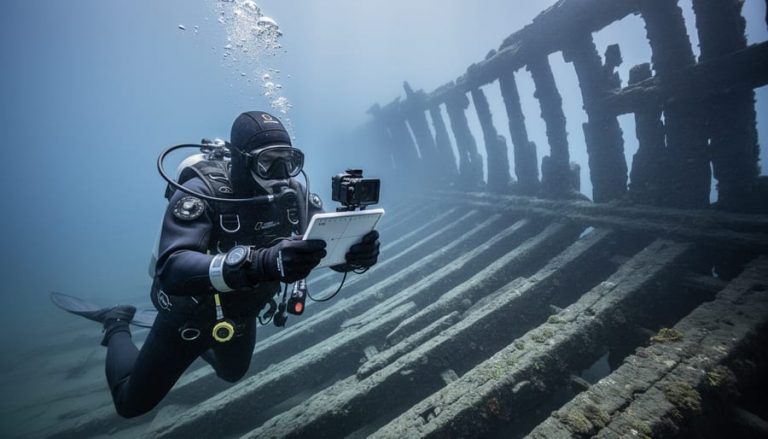
Beyond the St. Roch, rotating exhibits explore underwater archaeology techniques used along British Columbia’s coast, where countless shipwrecks await documentation. The museum’s research library houses maritime charts, vessel registries, and expedition journals that archaeology students and historians frequently consult. Plan at least two hours for your visit, particularly if you join the docent-led St. Roch tour offered at 2pm daily. The vessel’s remarkably intact galley, captain’s cabin, and engine room provide rare glimpses into working conditions that shaped Canada’s Arctic sovereignty claims and continue influencing contemporary polar research.
Science World and the Archaeology of Innovation
Vancouver’s iconic geodesic dome houses more than just interactive exhibits about natural phenomena—Science World serves as an unexpected gateway into understanding how archaeologists uncover humanity’s technological past. While not traditionally considered an archaeology museum, this science center regularly features exhibitions that explore human innovation through time, employing the same investigative methods archaeologists use in the field.
The museum’s approach to scientific methodology resonates strongly with archaeological practice. Visitors engage with hands-on exhibits demonstrating carbon dating principles, stratigraphy concepts, and material analysis—the very tools researchers employ when excavating ancient sites. During my recent visit, a staff educator explained how their “Feature Presentation” gallery showcases rotating exhibits that have included technological archaeology displays, examining everything from ancient metallurgy to the evolution of measurement tools.
Science World’s educational programming particularly shines in its “Science of the Past” workshops, where students learn to think like archaeologists. Participants analyze artifact replicas, reconstruct broken pottery using pattern recognition, and even simulate excavation techniques in controlled sandbox environments. These programs bridge the gap between pure science and historical investigation, demonstrating that archaeology fundamentally relies on physics, chemistry, and biology.
The museum also hosts occasional traveling exhibitions focusing on archaeological discoveries and ancient technologies. Past features have examined Egyptian engineering, Indigenous innovations in the Pacific Northwest, and the scientific analysis of preserved organic materials from archaeological contexts. These temporary exhibits typically run for three to six months, so checking Science World’s current programming before your visit ensures you don’t miss archaeology-focused content.
Located at 1455 Quebec Street near False Creek, Science World offers a refreshing perspective on how modern scientific methods illuminate our ancestral past, making it a valuable stop for anyone interested in the intersection of archaeology and contemporary research.
Hidden Gems: Specialized Collections Worth Your Time
Beyond Vancouver’s flagship institutions lie remarkable specialized collections that offer intimate encounters with the region’s diverse heritage. These hidden gems may lack the grandeur of larger museums, but they compensate with focused narratives and unique artifacts that tell compelling stories often overlooked in mainstream collections.
The Beaty Biodiversity Museum at the University of British Columbia houses over two million specimens that bridge natural history and human interaction with the environment. While wandering past drawers of carefully catalogued insects and shelves of preserved fish, visitors encounter archaeological evidence of how Indigenous peoples utilized local species for millennia. The museum’s herbarium contains plant specimens collected during early colonial expeditions, providing tangible connections to Vancouver’s transformation from Coast Salish territory to modern metropolis. Don’t miss the 25-meter blue whale skeleton suspended overhead—a dramatic reminder of the maritime world that shaped coastal cultures for thousands of years.
| Museum | Specialty Focus | Admission | Best For |
|---|---|---|---|
| Beaty Biodiversity Museum | Natural specimens & human-environment relationships | $14 adults | Ecology students, families |
| Britannia Mine Museum | Industrial archaeology & mining heritage | $32.95 adults | Industrial history buffs, adventure seekers |
| Chinese Canadian Museum | Immigration history & cultural preservation | By donation | Cultural heritage enthusiasts, educators |
Journey 45 minutes north to Britannia Mine Museum, where industrial archaeology comes alive within a decommissioned copper mine. Underground tours reveal the brutal working conditions that shaped labour movements across British Columbia. Surface exhibits display machinery, personal effects, and photographs documenting the multicultural workforce that extracted ore from 1905 to 1974. The site exemplifies industrial heritage preservation at its finest.
Downtown, the recently established Chinese Canadian Museum occupies the historically significant Wing Sang Building, Vancouver’s oldest structure in Chinatown. Archaeological excavations conducted during restoration uncovered artifacts illuminating the daily lives of early Chinese immigrants who faced systemic discrimination yet built thriving communities. Interactive exhibits trace migration patterns, examine the devastating impact of exclusion-era policies, and celebrate cultural resilience through preserved documents, photographs, and personal testimonies. This museum transforms heritage preservation into urgent contemporary dialogue about belonging and identity.
Planning Your Vancouver Museum Trail
Vancouver’s compact museum landscape rewards strategic planning, allowing dedicated visitors to experience multiple institutions in a single day or craft a leisurely multi-day exploration. The city’s geography naturally divides museums into convenient clusters that maximize your archaeological and cultural discovery time.
Start with the Downtown Cultural Corridor, where the Museum of Anthropology’s location on the University of British Columbia campus pairs beautifully with a morning visit before heading back downtown. TransLink’s 99 B-Line express bus connects UBC to the city center in approximately 25 minutes, depositing you near Vancouver Art Gallery and Vancouver Maritime Museum territory. Budget three hours minimum for MOA—their collection deserves unhurried contemplation.
The Vanier Park cluster creates an ideal afternoon combination, grouping the Museum of Vancouver, Vancouver Maritime Museum, and HR MacMillan Space Centre within walking distance of each other. Purchase the Vanier Park Explore Pass, which offers admission to all three venues at a reduced rate, saving approximately 20 percent compared to individual tickets. This waterfront setting provides natural transition points between institutions, with outdoor spaces perfect for reflection between exhibits.
Transit-savvy travelers should invest in a day pass for unlimited travel across buses, SeaBus, and SkyTrain. The museum circuit works beautifully with TransLink’s integrated system—download the Transit app for real-time routing. Most major institutions cluster along the Canada Line and 99 B-Line corridors.
Timing matters significantly for archaeological enthusiasts. Dr. Sarah Chen, curator of Pacific Northwest collections, recommends visiting weekday mornings when guided tours and curator talks often occur. “Tuesday and Wednesday mornings offer the quietest galleries and best opportunities for close examination of artifacts,” she notes. Summer brings extended hours but heavier crowds, while winter offers intimate experiences with collections.
Plan rest days between intensive museum visits—archaeological comprehension deepens with processing time. Consider alternating museum days with outdoor exploration of actual heritage sites like Musqueam Park or Stanley Park’s Indigenous cultural markers. This rhythm prevents exhibit fatigue while reinforcing connections between museum collections and living landscapes.
Book specialized tours in advance, particularly for MOA’s behind-the-scenes storage facilities and conservation labs. These limited-access experiences often fill weeks ahead during peak season but provide unparalleled archaeological insights unavailable through standard admission.
Vancouver’s museum landscape represents far more than a regional attraction—it stands as a vital gateway to understanding Canada’s deep and layered past. From the internationally acclaimed collections at the Museum of Anthropology to the intimate archaeological narratives preserved at smaller institutions, these spaces collectively illuminate ten thousand years of human presence along the Pacific Coast. The city’s museums don’t simply display artifacts; they invite you into ongoing conversations about identity, heritage, and the evolving relationship between past and present.
For archaeology students and history enthusiasts, Vancouver offers unparalleled opportunities to witness how Indigenous knowledge systems and Western archaeological methodologies can complement rather than compete with one another. The collaborative approaches pioneered here have influenced museum practices across Canada, making Vancouver essential to understanding contemporary heritage interpretation.
As you plan your visit, consider dedicating at least three to four days to fully appreciate the depth these institutions offer. Start with the major museums to establish context, then venture to neighborhood galleries and archaeological sites where local stories emerge with striking clarity. Engage with educators during guided tours, attend public lectures, and don’t hesitate to ask questions—these museums thrive on curiosity.
Whether you’re conducting research, teaching the next generation, or simply following your passion for discovery, Vancouver’s museums reward those who look beyond the glass cases to see the human stories waiting beneath. Your journey through these collections becomes part of Canada’s ongoing archaeological story.

+ There are no comments
Add yours