
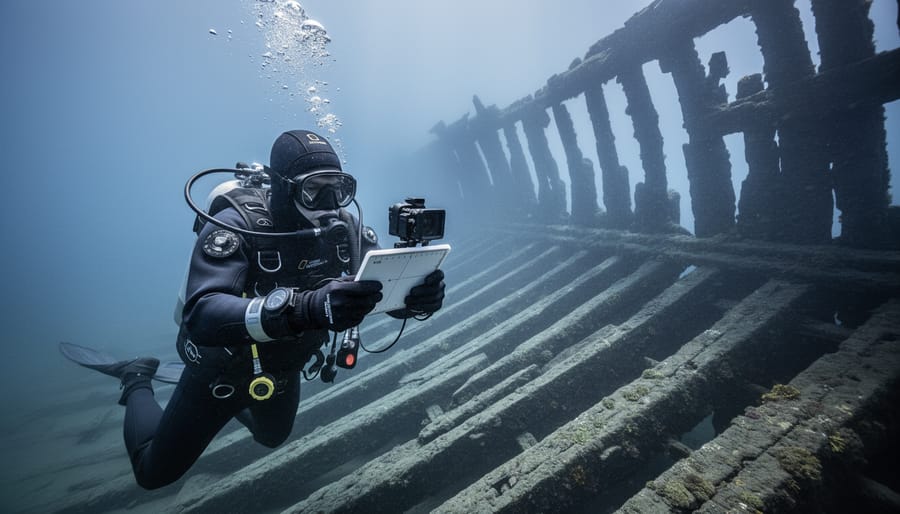
Underwater archaeologists recover and interpret submerged cultural heritage by diving to shipwrecks, flooded settlements, and drowned landscapes, combining fieldwork techniques from both traditional archaeology and commercial diving. These specialists document wooden hull fragments in frigid Great Lakes waters, map 18th-century French colonial sites along the St. Lawrence, and excavate Indigenous fishing weirs submerged for thousands of years off Canada’s coasts. The work demands advanced scuba certifications, meticulous recording under time and visibility constraints, and the ability to analyze artifacts degraded by decades or centuries underwater.
Canada’s maritime history makes it a particularly rich theater for this discipline. From the War of 1812 wrecks in Lake Ontario to Arctic exploration vessels frozen in time, the country’s waterways hold stories that can’t be told through land-based digs alone. A small community of professional underwater archaeologists, many affiliated with Parks Canada or provincial heritage agencies, has spent the past four decades mapping these sites and bringing their findings into public institutions where visitors can engage directly with recovered material culture.
The field offers more than academic fascination. Museums across the country now feature exhibits drawn from underwater excavations, displaying everything from perfectly preserved ship’s tools to personal effects that humanize long-lost crews. Travellers can visit conservation labs where waterlogged wood undergoes years-long stabilization, tour interpretation centers built adjacent to dive sites, and in some cases even join guided snorkel programs over shallow wrecks. Understanding what underwater archaeologists do and where they work opens pathways to experiencing Canadian history from an entirely different vantage point, one where cold water and silt have protected narratives that would have vanished on dry land.
What Underwater Archaeologists Actually Do
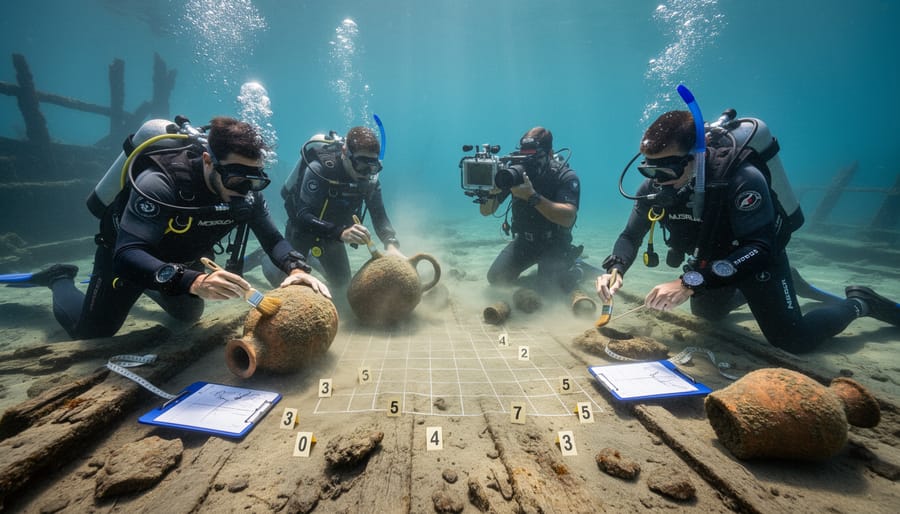
Underwater archaeologists spend most of their time doing exactly what land-based archaeologists do, research, planning, documentation, and lab work, except when they finally get in the water, they’re working against time, cold, darkness, and physics that doesn’t care about their carefully laid plans.
Before a single diver enters the water, months or years go into archival research, sonar mapping, and securing permits. Teams analyze historical records, shipping manifests, and naval charts to pinpoint potential sites. Once they’ve located a promising target, they deploy side-scan sonar and magnetometers to create detailed maps of the lakebed or seafloor. Only then does the actual diving begin, and even that isn’t what most people imagine.
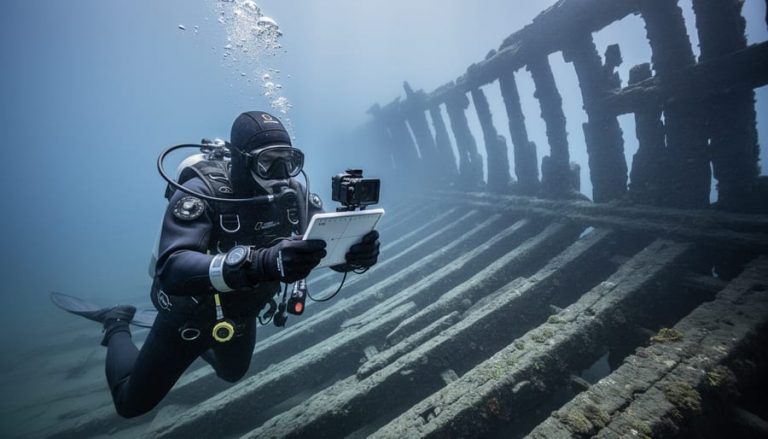
Professional archaeological diving looks nothing like recreational diving. There’s no leisurely drift along a reef. Instead, divers work in tight grids, measuring and photographing every artifact in place before anything moves. They use lift bags to raise heavy objects, vacuum dredges to remove sediment without disturbing fragile materials, and underwater slates to sketch site plans in real time. Visibility might be two feet or less in silty river bottoms. Water temperatures in Canadian sites often hover just above freezing, limiting bottom time to 20 or 30 minutes before hypothermia becomes a serious risk.
The physical challenges compound the archaeological ones. Excavation techniques developed for dry land don’t translate underwater. You can’t simply brush dirt away when water keeps filling your excavation. Fine motor control disappears when wearing thick gloves. Artifacts that would survive gentle handling on land can disintegrate when exposed to air after centuries in water. Wood becomes waterlogged and fragile. Iron objects begin corroding the moment they surface. Textiles and leather need immediate conservation or they’ll crumble within hours.
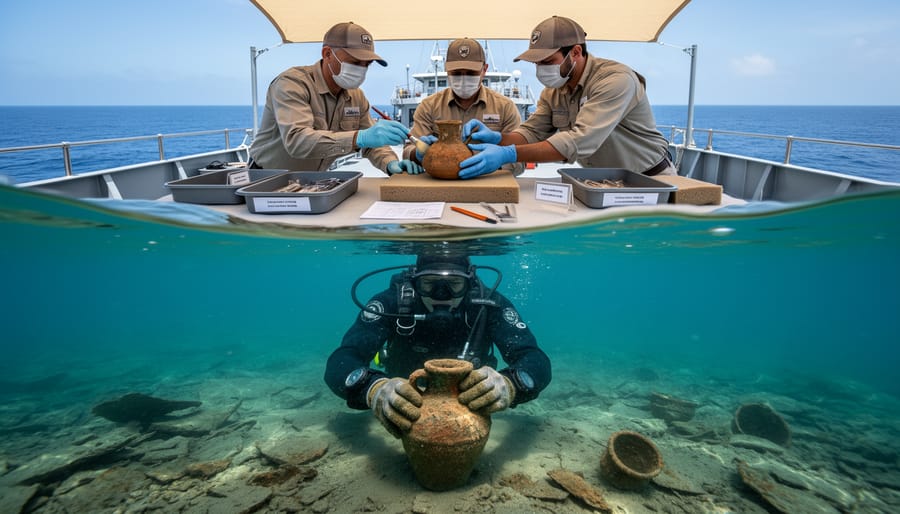
Back on shore or aboard the research vessel, the real work continues. Every artifact must be stabilized in fresh water baths, then treated with specialized chemicals to replace the water in its cellular structure. Documentation fills hundreds of pages per dive, site maps, artifact catalogs, photographic records, sediment analysis. One day of diving can generate weeks of lab work.
The job demands specific certifications beyond basic scuba training: scientific diving credentials, underwater photography expertise, knowledge of maritime history and conservation chemistry, and the physical stamina to handle gear that weighs more than most people lift at the gym. It’s methodical, exhausting, and occasionally transcendent when you’re the first person to touch an object in 150 years.
The Training and Expertise Behind the Work
Becoming an underwater archaeologist in Canada requires a unique combination of academic training and physical expertise that few professions demand. The path typically begins with an undergraduate degree in archaeology or anthropology, followed by graduate-level specialization in maritime or underwater archaeology. Memorial University of Newfoundland offers one of the few dedicated maritime archaeology programs in the country, while institutions like the University of Calgary and Simon Fraser University provide courses in archaeological field methods that can be applied to underwater contexts.
The diving component sets this career apart from traditional archaeology. Aspiring underwater archaeologists must obtain professional-level diver certification requirements that exceed recreational standards. Most positions require Advanced Open Water certification at minimum, though many professionals hold technical diving credentials allowing them to work at greater depths and in more challenging conditions. Cold water diving certification becomes essential for anyone working in Canadian waters, where temperatures rarely climb above 10°C even in summer.
Beyond basic diving skills, specialized training bridges the gap between these two disciplines:
- Scientific Diving Certification
- A professional standard that combines diving proficiency with research protocols, emphasizing safety, underwater documentation, and data collection techniques specific to scientific work rather than recreation.
- Archaeological Field School
- Intensive hands-on training programs, often conducted at active excavation sites, where students learn artifact handling, site mapping, and excavation techniques under professional supervision.
- Parks Canada Underwater Archaeology Training
- Specialized government certification for those working on federally protected sites, covering legal requirements, conservation standards, and protocols specific to heritage resources in Canadian waters.
- Underwater Photography and Videography
- Technical training in capturing high-quality visual documentation underwater, essential for recording site conditions, artifact positions, and creating public-facing materials about discoveries.
Practical experience proves just as critical as classroom learning. Most successful candidates spend summers volunteering on underwater archaeology projects, gaining exposure to real excavation conditions while building professional networks. This fieldwork teaches skills no textbook can convey: how to maintain neutral buoyancy while delicately brushing sediment from a 200-year-old timber, or how to sketch an artifact’s position when your fingers are numb and visibility drops to two meters. The combination of academic rigor and physical capability creates professionals capable of making history visible, one dive at a time.
Where Canada’s Underwater Archaeologists Work
The Great Lakes: A Graveyard of Ships
The Great Lakes hold over 6,000 documented shipwrecks, making them one of North America’s richest underwater archaeological landscapes. Underwater archaeologists working these freshwater sites benefit from exceptional preservation conditions, cold temperatures and lack of saltwater teredo worms mean wooden hulls survive largely intact, sometimes for centuries.
Parks Canada’s underwater archaeology team has mapped dozens of wrecks in the St. Lawrence River and Lake Ontario, including the War of 1812 schooners Hamilton and Scourge, lying in 300 feet of water off Port Dalhousie. These vessels capsized in a sudden squall in 1813, preserving a snapshot of naval warfare down to the officers’ personal effects still scattered on deck.
Lake Superior draws particular attention for its icy depths and dramatic losses. The Edmund Fitzgerald, which sank in 1975, remains an active research site where archaeologists document how modern steel vessels deteriorate underwater. Meanwhile, in Georgian Bay, researchers from the Ontario government survey the Arabia, an 1884 sidewheel steamer whose machinery tells the story of Great Lakes commercial shipping at its peak.
These projects combine remote-operated vehicles, side-scan sonar, and traditional dive surveys to build comprehensive site maps without disturbing the wrecks themselves.
Atlantic Canada’s Maritime Heritage
Atlantic Canada’s seabed holds centuries of maritime history, from French colonial vessels to British warships lost in fog and storm. Underwater archaeologists here work in cold, murky waters where visibility often drops to arm’s length, documenting wrecks that tell stories of transatlantic trade, naval warfare, and settlement attempts. Off Nova Scotia’s coast, teams have mapped dozens of privateering-era ships, their wooden hulls preserved in silt. The Bay of Fundy, with its extreme tides, presents unique challenges, divers must time dives precisely between tidal shifts that can expose or bury sites within hours.
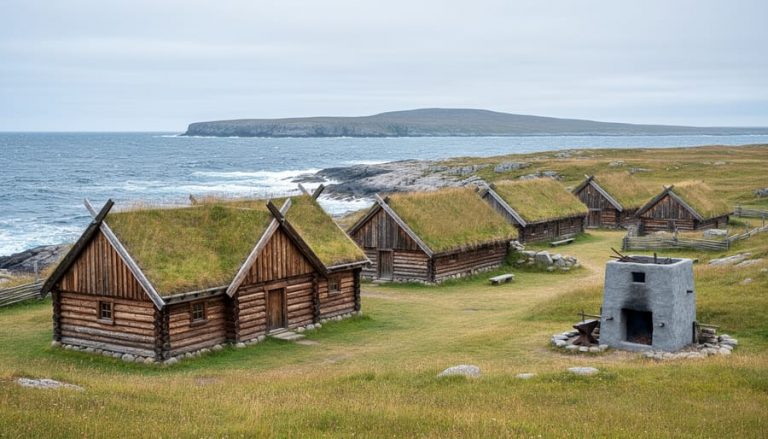
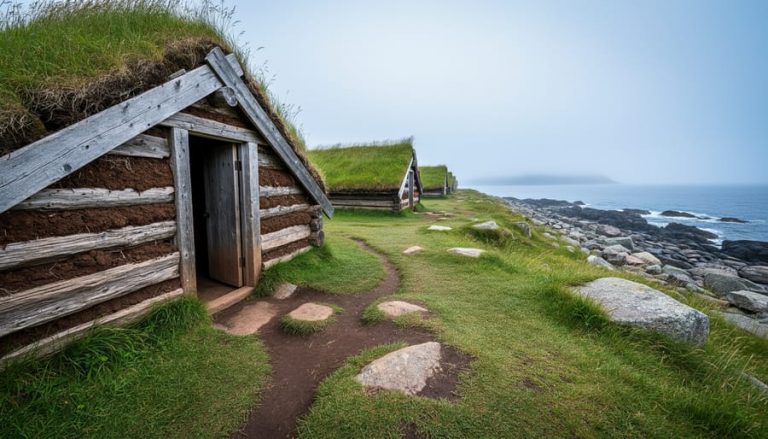
Newfoundland waters offer particularly rich targets. Beyond the famous Norse settlement at L’Anse aux Meadows on land, researchers investigate submerged features that may connect to the Vikings discovery though most Atlantic work focuses on later periods. Colonial fishing stations, merchant vessels carrying European goods, and Royal Navy frigates from the Seven Years’ War all rest beneath these waves, each requiring months of careful excavation and recording before artifacts reach conservation labs.
Pacific Northwest and Indigenous Underwater Sites
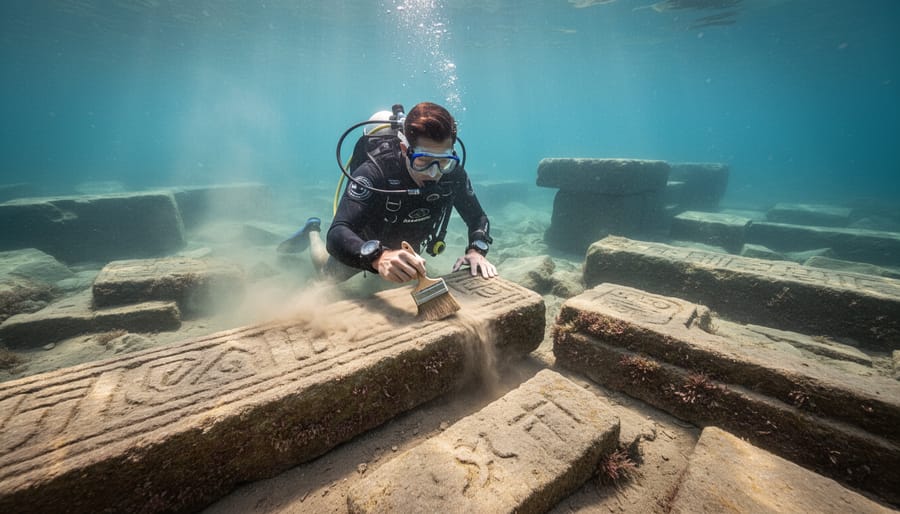
The Pacific coast of British Columbia holds thousands of years of Indigenous history beneath its waters. Underwater archaeologists working here focus on cultural sites that predate European contact, revealing sophisticated technologies and settlements now submerged by rising sea levels since the last ice age.
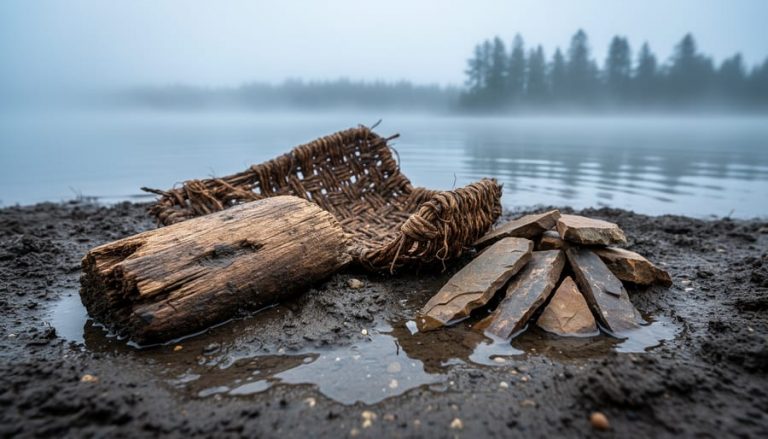
Ancient fish traps built from stone and wood line tidal zones along the coast, some still visible at low tide. These structures demonstrate complex resource management systems used by Coast Salish, Haida, and other First Nations for millennia. Archaeologists map these features carefully, often working alongside Indigenous knowledge keepers who provide crucial cultural context.
Submerged village sites off Vancouver Island and the Gulf Islands offer glimpses of coastal life from 8,000 years ago. Divers recover stone tools, carved wooden objects preserved in cold water, and evidence of permanent settlements that shifted location as sea levels rose. This work requires sensitivity and collaboration, as many sites hold spiritual significance for contemporary Indigenous communities who participate directly in research decisions and interpretation.
Arctic Expeditions: Franklin and Beyond
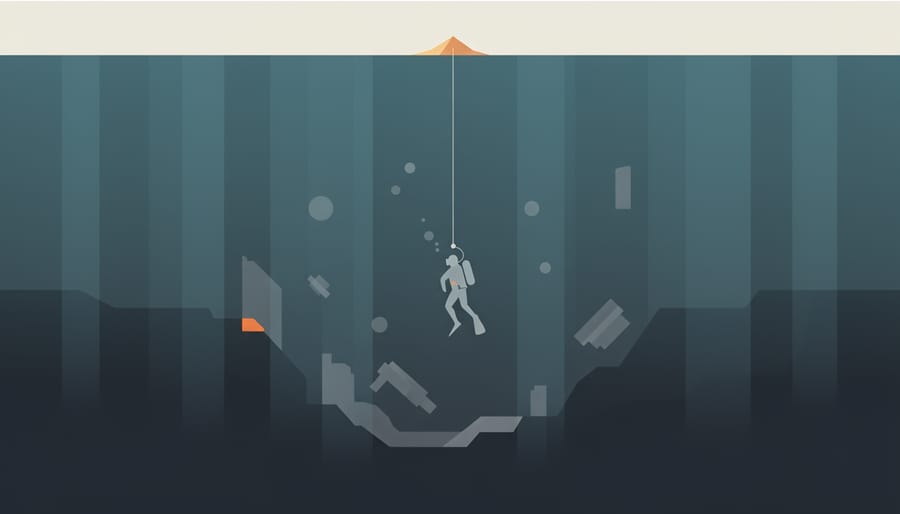
The 2014 and 2016 discoveries of HMS Erebus and Terror, vessels from Sir John Franklin’s doomed 1845 expedition, transformed Arctic underwater archaeology from theoretical possibility into reality. Parks Canada teams worked in extreme ice conditions where the dive season lasts mere weeks and water temperatures hover just above freezing. Remote operations required helicopters, specialized cold-water gear, and ROVs that could navigate under shifting ice.
These discoveries opened investigations beyond Franklin: submerged Thule whaling sites, European explorer wrecks scattered across the Northwest Passage, and Indigenous kayak remains preserved in frigid waters. The technical demands are punishing, limited visibility from ice melt, depths complicated by pressure ridges, and zero margin for equipment failure in locations hours from help. Yet the Arctic’s cold acts as a preservative, keeping wooden ships and organic artifacts remarkably intact where they’d disintegrate in warmer seas.
Meet the Professionals: Expert Voices from the Field
Dr. Sarah Chen never imagined that a childhood spent diving off Vancouver Island would lead to her current role mapping 5,000-year-old fish weirs submerged beneath the Salish Sea. “I started as a recreational diver who loved history,” she explains from her office at Simon Fraser University. “It took years of combining archaeology degrees with technical diving certifications before I could actually work on sites professionally. The moment I realized this was my calling came during a field school in Fathom Five National Marine Park, when I brushed sediment off a perfectly preserved ship’s bell and felt that direct connection to someone’s lived experience centuries ago.”
That sense of discovery drives many professionals in this small, tightly-knit community. Jonathan Moorehead, who has surveyed more than forty Great Lakes wrecks, recalls his most challenging project: documenting a schooner in Lake Superior at depths requiring mixed-gas diving. “The visibility was two feet, the water was 38 degrees, and we had maybe twenty minutes of bottom time,” he says. “But when we pieced together the site plan back on the boat, we could finally identify a vessel that had been missing from historical records for 140 years. That’s why we do this work in miserable conditions.”
The path into underwater archaeology varies widely. Dr. Marc Lavoie entered the field through classical archaeology, only learning to dive after completing his PhD. “I excavated Roman sites in France for years before I ever touched underwater work,” he notes. “Now I spend summers surveying colonial-era harbors in Quebec, and the methodologies are remarkably similar, just slower, colder, and with a time limit imposed by your air supply.”
These professionals emphasize that their work extends far beyond individual artifacts. Lisa Hodgetts, whose team documented Indigenous stone fishing structures off the British Columbia coast, points out that underwater sites often preserve organic materials and spatial relationships impossible to find on land. Her research connects directly to broader archaeological narratives, including work on Williams Lake artifacts and other interior sites, showing how coastal and inland communities traded and interacted. “We’re not treasure hunters,” she stresses. “We’re reconstructing entire ways of life that would be lost without this specialized fieldwork.”
The Challenges and Rewards of Working Underwater
Working beneath the surface tests every underwater archaeologist’s limits. Cold water seeps through even the best drysuits during multi-hour dives in Canadian lakes and coastal waters, where temperatures hover near freezing for much of the year. Visibility can drop to arm’s length or worse when sediment clouds the water, forcing archaeologists to map sites by touch and memory as much as sight. Depth restrictions dictate how long teams can work before decompression becomes a concern, many significant wrecks lie deep enough that bottom time measures in minutes, not hours, making every second count.
The technical challenges multiply quickly. Equipment failures mean immediate surface returns, wasting precious dive windows. Currents can sweep away delicate artifacts or make hovering over an excavation grid nearly impossible. Documentation underwater requires waterproof cameras, specialized lighting, and the patience to photograph each artifact from multiple angles while neutrally buoyant. Surface support teams coordinate constantly with divers through underwater communication systems, managing safety lines and monitoring air supplies.
Pros
- Discovery of artifacts untouched for centuries creates profound connection to the past.
- Collaboration with skilled dive teams builds strong professional relationships and shared purpose.
- Physical environment provides natural preservation conditions protecting fragile materials.
- Each site presents unique puzzles requiring creative problem-solving and adaptability.
Cons
- Cold water exposure leads to exhaustion and limits working hours significantly.
- Poor visibility creates dangerous conditions and slows documentation to a crawl.
- Depth restrictions compress work into brief windows, frustrating project timelines.
- Equipment costs and maintenance demands consume substantial portions of research budgets.
Yet the rewards outweigh every hardship. Touching an artifact that hasn’t seen light since its ship went down creates an emotional rush no terrestrial dig can match. The weightlessness allows archaeologists to approach sites from any angle, revealing details land-based colleagues never experience. When a team surfaces after locating a long-sought wreck or recovering a significant artifact, the exhaustion vanishes in shared triumph. These moments, holding a sailor’s personal possession, uncovering a ship’s nameplate, or mapping an intact cargo hold, justify every frozen finger and every dive cut short by failing light.
How Canadians Can Experience Underwater Archaeology
Museums Showcasing Underwater Discoveries
Several Canadian institutions house remarkable collections recovered from underwater sites, each offering unique windows into submerged heritage.
| Museum | Location | Featured Artifacts | Visitor Highlights |
|---|---|---|---|
| Marine Museum of the Great Lakes | Kingston, ON | Recovered shipwreck cargo, navigation instruments | Interactive dive simulation |
| Maritime Museum of the Atlantic | Halifax, NS | Titanic artifacts, naval wreck remains | Conservation lab viewing |
| Museum of Ontario Archaeology | London, ON | Indigenous fish weirs, pre-contact tools | Hands-on artifact handling |
| Vancouver Maritime Museum | Vancouver, BC | Pacific coast wreck materials, coastal Indigenous items | Rotating special exhibitions |
The Maritime Museum of the Atlantic displays artifacts raised from Halifax Harbour shipwrecks, including exceptionally preserved wooden elements thanks to cold Atlantic waters. For those interested in Pacific discoveries, Vancouver museum exhibits feature materials recovered from coastal waters alongside Indigenous cultural materials. Most institutions offer behind-the-scenes tours where visitors see conservation work in progress, waterlogged artifacts slowly drying in controlled environments, metal objects undergoing electrolysis treatment.
Accessible Dive Sites and Heritage Wrecks
Certified divers can visit several protected shipwrecks in Canadian waters, though access comes with specific rules. The Great Lakes host numerous dive-accessible wrecks: Ontario’s Sweepstakes and City of Grand Rapids in Fathom Five National Marine Park sit in shallow, clear water ideal for intermediate divers. You’ll need a park permit, available online or at the Tobermory visitor center, and must register your dive plan before entering the water.
British Columbia’s HMCS Chaudière, deliberately sunk off Sechelt as an artificial reef, welcomes divers year-round without special permits beyond standard recreational diving credentials. Atlantic Canada offers the Hestia in Newfoundland’s Bell Island waters, though colder temperatures and stronger currents demand advanced certification.
Before planning any dive, check Parks Canada’s regulations for protected sites and consult local dive shops about current conditions. Some wrecks sit within marine protected areas governed by legal authorities and restrictions that prohibit artifact removal and limit group sizes. Never dive alone on heritage sites, and always brief yourself on depth limits, visibility patterns, and emergency protocols for each specific location.
Getting Involved: Volunteer and Educational Programs
You don’t need a PhD to get your hands wet in underwater archaeology. Parks Canada runs occasional volunteer dives at select sites, though spaces fill quickly and you’ll need advanced diving certification plus cold-water experience. More accessible are the field schools offered through Brock University and Memorial University, which combine classroom instruction with real excavation work under professional supervision, typically two-week programs in summer that accept undergraduates and keen amateurs alike.
The Newfoundland and Labrador Archaeological Survey accepts citizen scientists for shoreline surveys following storms, when artifacts from sites like L’Anse aux Meadows occasionally wash up or become newly visible. If you’re not dive-certified, consider the Ontario Underwater Council’s heritage diving workshops, which teach documentation techniques at shallow recreational sites. The Royal Ontario Museum occasionally posts calls for volunteers to help catalog recovered artifacts, unglamorous sorting and labeling work that nonetheless puts you in direct contact with objects pulled from the depths.
Planning Your Underwater Archaeology Itinerary
A five-day journey through Ontario’s Golden Horseshoe and eastern Great Lakes region offers the most concentrated experience of Canada’s underwater archaeological treasures, with world-class collections, accessible dive sites, and expert-led programs all within a manageable driving circuit.
Base yourself in Kingston for the first two nights. This limestone city sits at the strategic junction where Lake Ontario meets the St. Lawrence River, making it the historical epicenter of freshwater maritime activity. The Marine Museum of the Great Lakes houses artifacts recovered from dozens of local wrecks, including personal effects from the 1841 sinking of the SS Victoria. Arrive early on your first afternoon to allow time for both the main galleries and the museum ship Alexander Henry before the 5 p.m. closing. Book a room at the Rosemount Inn, a restored 1850s limestone mansion within walking distance of the waterfront, where rates start around $180 in shoulder season.
Day two, connect with Save Ontario Shipwrecks for their Saturday morning heritage dive on the Rothesay, a 170-foot schooner resting in just 80 feet of water off Wolfe Island. The organization runs supervised dives from May through October for certified divers, with equipment rental available on-site. Non-divers can join the surface support crew and view live video feeds from helmet cameras.
- Day 3: Drive two hours west to Toronto. Spend the afternoon at the Royal Ontario Museum’s permanent “Hands-On Biodiversity” gallery, which includes preserved specimens and artifacts from Lake Ontario’s submerged Indigenous fish weirs. Check into the Chelsea Hotel (from $210), which offers family suites if you’re traveling with kids.
- Day 4: Morning visit to the Toronto Marine Historical Society’s collection in the Harbourfront district, followed by an afternoon harbor cruise that passes over marked wreck sites. The guides provide detailed narration about each vessel’s history and the archaeological work conducted on them.
- Day 5: Drive 90 minutes north to Tobermory. Join a glass-bottom boat tour over Fathom Five National Marine Park’s famous wreck sites, where you’ll see the intact wooden hull of the Sweepstakes through crystal-clear water without getting wet.
Book accommodations six weeks ahead for summer travel, and always call museums directly to confirm current exhibit rotations and any temporary closures. Pack layers, even August mornings on the Great Lakes cut through a sweater.
Canada’s underwater archaeologists work at the intersection of adventure and scholarship, recovering stories that would otherwise vanish beneath the waves. Their dedication preserves not just artifacts but entire chapters of our national narrative, from Indigenous coastal traditions to colonial maritime disasters, from Arctic exploration to Great Lakes commerce. Each dive represents hours of preparation, meticulous documentation, and careful conservation that transforms submerged objects into windows onto the past.
The tangible results of their work wait for you in museums across the country. At the Canadian Museum of History, you’ll stand before Franklin Expedition artifacts that spent 170 years beneath Arctic ice. The Marine Museum of the Great Lakes displays recovered ship components that tell stories of 19th-century trade and tragedy. Regional institutions from Halifax to Victoria showcase how underwater discoveries reshape our understanding of coastal communities and maritime heritage.
You don’t need a diving certification to participate in this field. Volunteer digs, field school programs, and citizen science projects welcome enthusiastic learners. Even visiting heritage shipwreck sites with interpretive signage connects you to the profession’s broader mission.
These specialists remind us that history isn’t confined to land. Underwater archaeologists ensure that Canada’s submerged past remains accessible to present and future generations. Their work proves that some of our most compelling historical evidence requires both academic rigor and a willingness to plunge into cold, dark water in pursuit of truth.

+ There are no comments
Add yours